Lumina Mascot LogoLumina
/
Transform the uploaded reference image into a beautiful, premium editorial illustration...
海报与版式3:4

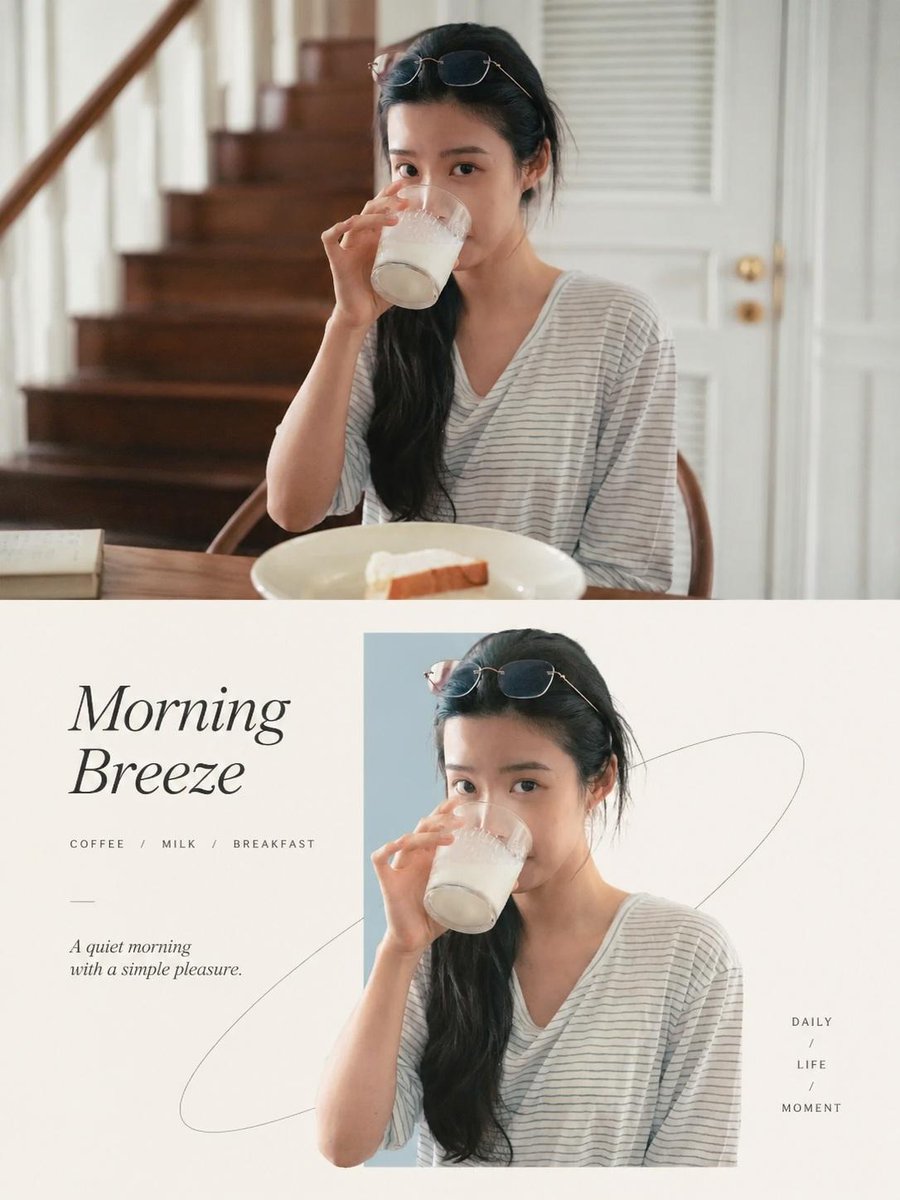
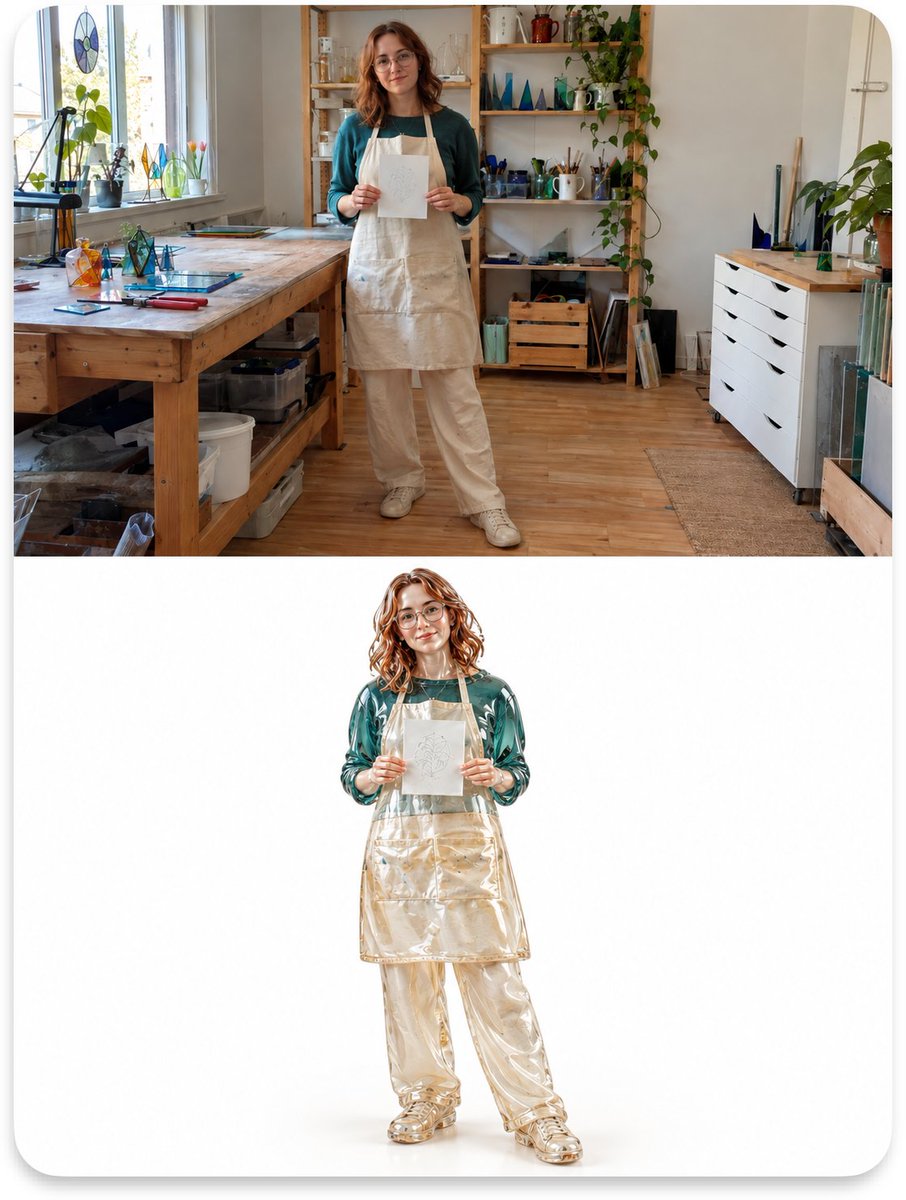
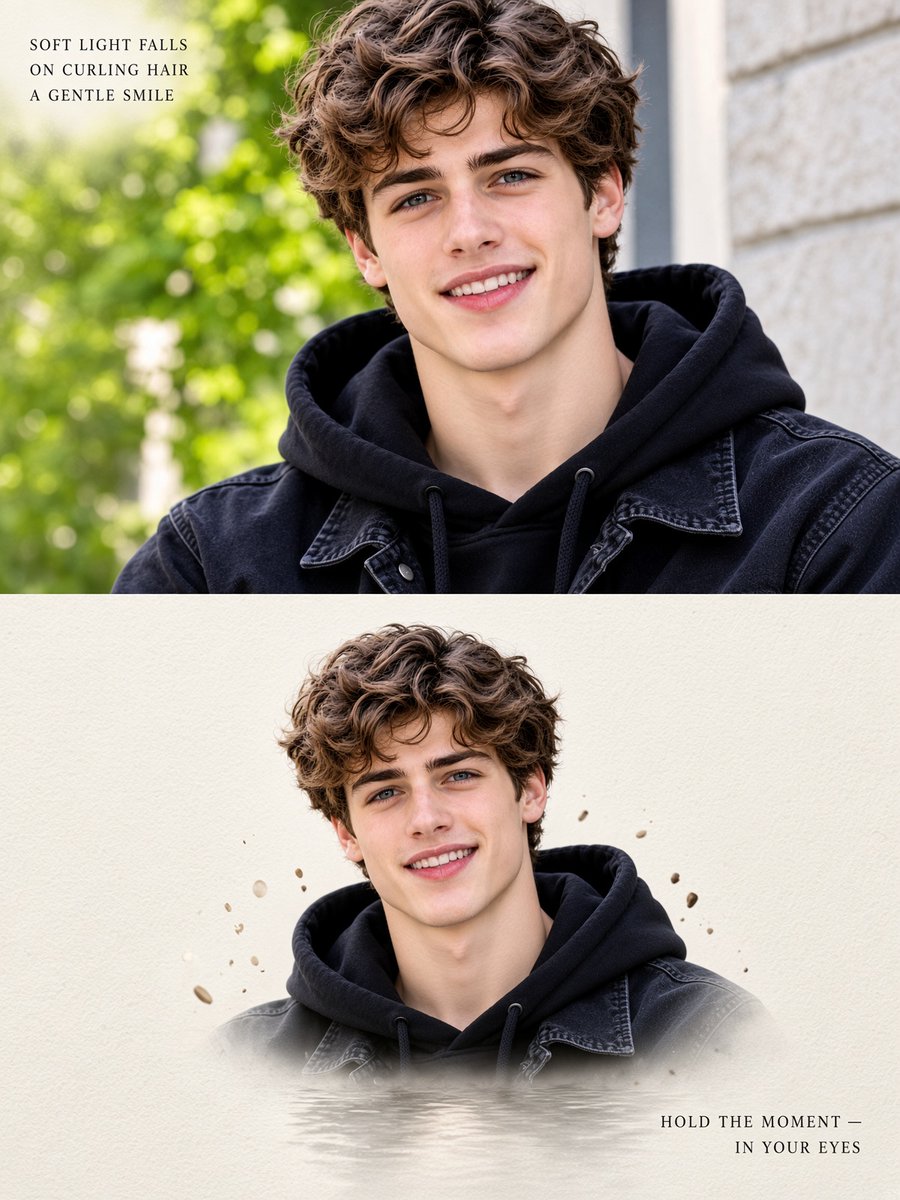
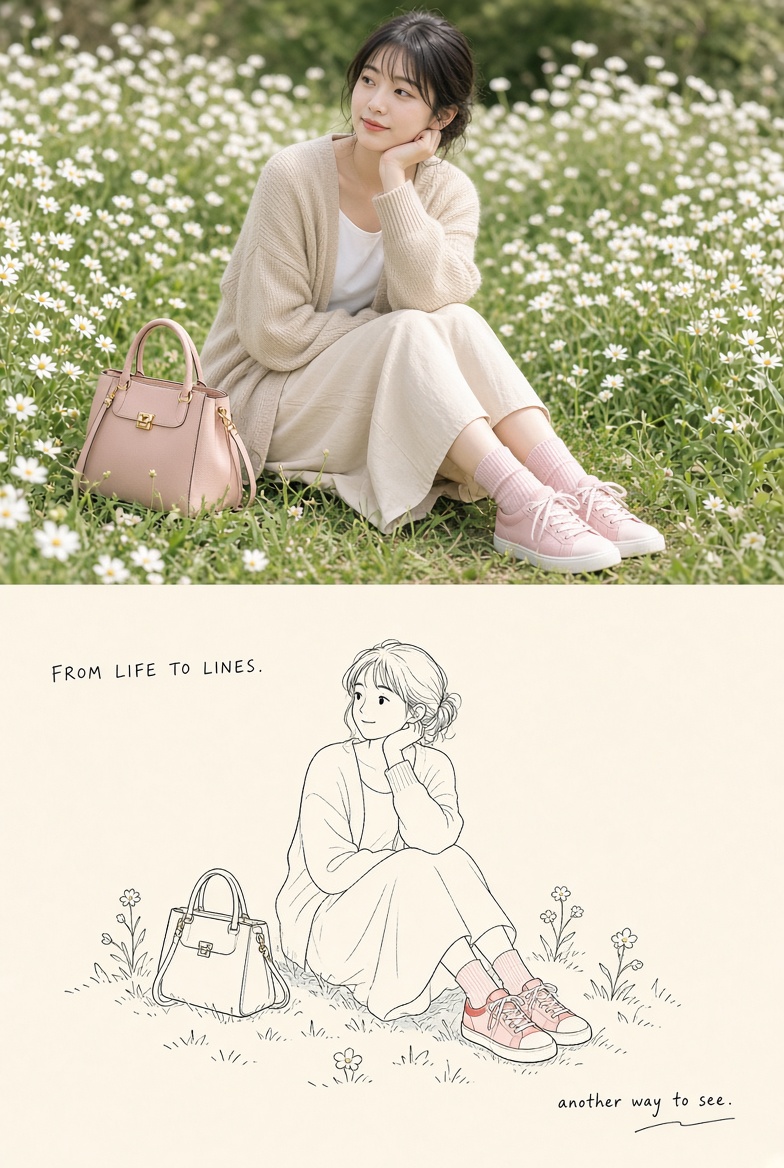
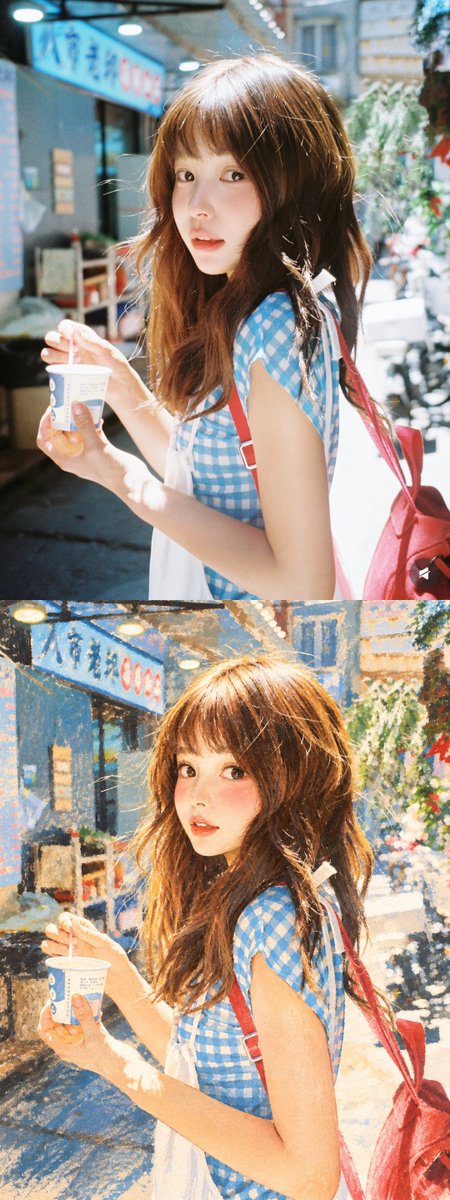
Transform the uploaded reference image into a beautiful, premium editorial illustration poster. Composition: Create a vertical 4:5 split-layout design. The upper half should display the original photograph in its realistic photographic style, preserving the subject's exact appearance, facial features, hairstyle, outfit, pose, and expression. The lower half should feature a beautifully stylized 2D illustration of the exact same subject, recreating the original photograph's pose, expression, clothing, and composition. Convert the subject into a charming, hand-painted digital illustration with soft brush textures, clean shapes, delicate outlines, warm skin tones, and beautiful artistic details. Background Design: Transform the original background into a creative illustrated environment. Add minimal geometric architecture, abstract shapes, subtle plants, soft natural elements, and a complementary color palette inspired by the original photograph. Poster Layout: Place the illustration inside a clean rectangular artwork frame, surrounded by a warm ivory or cream-colored background. Add a large elegant uppercase headline beneath the illustration, with a small complementary subtitle and a subtle decorative line. Typography: Use thin, sophisticated, widely spaced uppercase lettering. Choose a short title that matches the mood of the photograph, with a smaller minimalist tagline underneath. Art Direction: Modern Japanese editorial poster design, contemporary lifestyle illustration, soft pastel colors, warm sunlight, minimalist graphic design, artistic storytelling, premium magazine aesthetic. Important: Maintain the original person's identity and recognizable features. The illustrated version must clearly resemble the person in the original photograph. Keep the top photograph realistic and the bottom illustration artistic. Ensure both versions match perfectly in pose and composition. High-quality details, balanced layout, elegant negative space, professional art direction, 4:5 portrait poster.

GPT Image 2.5
Turn your photo into a minimalist premium editorial poster design with GPT Image 2.5
海报与版式3:4

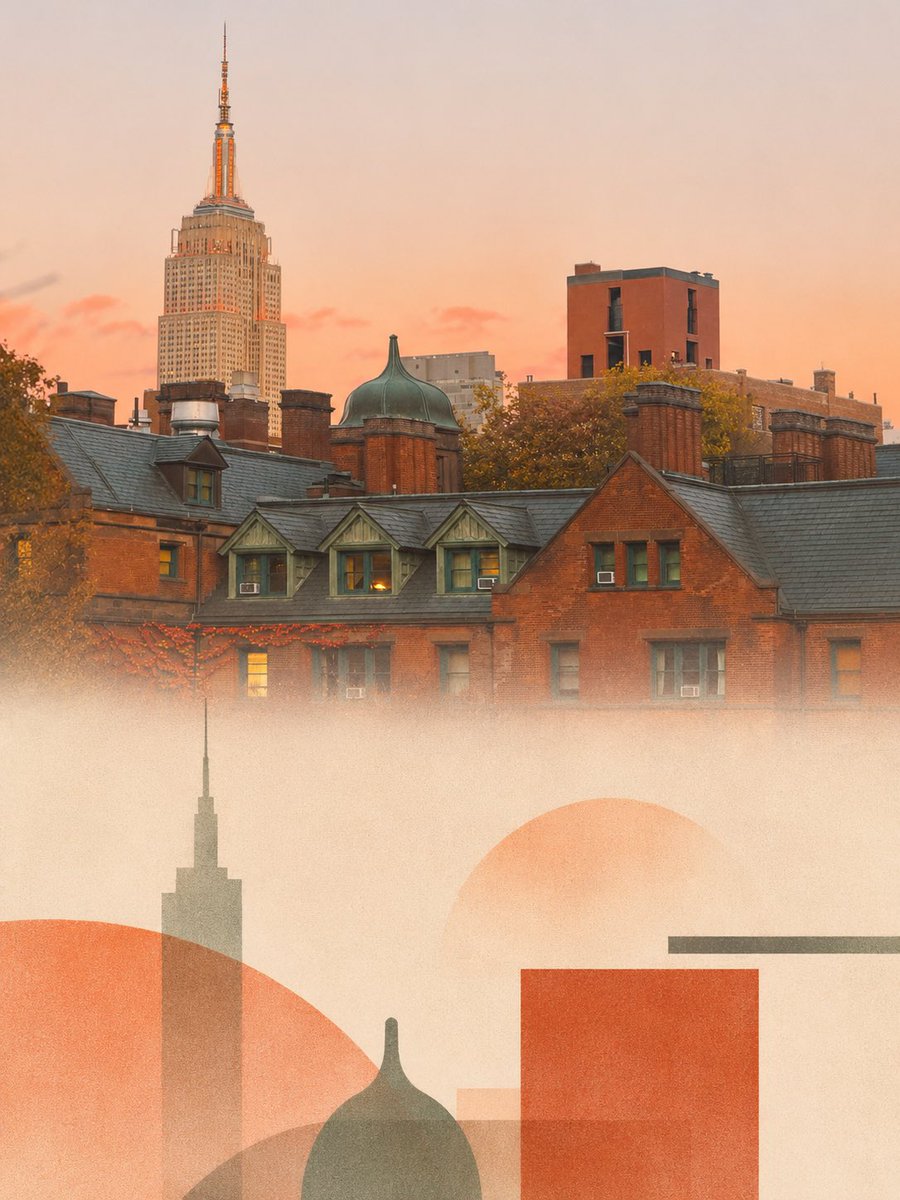
Turn your photo into a minimalist premium editorial poster design with GPT Image 2.5 Prompt: PREMIUM EDITORIAL POSTER DESIGN — PHOTOGRAPHY MEETS GEOMETRIC ART OVERALL INSTRUCTION Transform each uploaded photograph into a separate, standalone premium design poster. Do not combine multiple photographs into a collage or create a multi-image composition. Each original photograph must produce its own independent poster. Canvas: Vertical 3:4 aspect ratio. Layout: Divide the canvas into two perfectly equal horizontal sections: - Top section: Exactly 50% of the total canvas height. - Bottom section: Exactly 50% of the total canvas height. The transition between the two sections must be clean, precise, and perfectly aligned. --- TOP HALF — ORIGINAL PHOTOGRAPH Preserve the original photograph as faithfully as possible. - Maintain the original subject, structure, proportions, pose, perspective, and spatial relationships. - Preserve realistic textures, natural lighting, shadows, and the original color atmosphere. - Apply only subtle, sophisticated photographic color grading to achieve the visual quality of a luxury brand campaign, fine-art editorial magazine, or contemporary art exhibition. - Enhance tonal depth, highlight roll-off, contrast, and color harmony without making the image look artificially processed. - If necessary, naturally extend the sky, ground, or surrounding environment to fit the composition. - Never alter, distort, replace, or unnecessarily regenerate the original subject. The upper section should feel like a beautifully art-directed original photograph rather than an AI-generated reinterpretation. --- BOTTOM HALF — MINIMALIST GEOMETRIC EDITORIAL POSTER Extract the most recognizable visual elements from the original photograph, including its subject, silhouette, posture, defining contours, movement, and narrative relationships. Reinterpret these elements into a sophisticated minimalist commercial-art composition. Core Visual Concept: "REAL OBJECTS THROUGH GEOMETRIC EMOTIONAL WINDOWS" Introduce one narrow, restrained, low-saturation geometric color block that acts as the primary visual anchor and spatial container. The geometric element should not follow a fixed orientation. Depending on the subject's visual weight, movement, silhouette, direction, and overall composition, it may be: - Horizontal. - Vertical. - Diagonal. - Slightly tilted or asymmetrically positioned. The original subject should appear within or emerging through this geometric window, maintaining a realistic photographic appearance or highly refined photorealistic rendering. Create an elegant interaction between the subject and the geometric boundary: - Allow selected parts of the subject to extend beyond the geometric shape. - Introduce subtle overlapping and intentional boundary-breaking. - Let parts of the subject emerge, cross through, or extend outside the color block. - Create a convincing sense of depth, spatial penetration, and natural movement. The result should feel as though a real physical object is passing through an abstract geometric space, creating a beautiful relationship between reality and graphic design. Avoid excessive decoration or unnecessary visual complexity. --- COMPOSITION & SPATIAL BALANCE Maintain an exceptionally clean, minimal, and balanced composition. Use three primary elements to establish the visual hierarchy: 1. The geometric color window. 2. The realistic subject interacting with and extending beyond its boundaries. 3. Generous negative space. The subject may be centered, asymmetrically positioned, vertically elongated, or horizontally extended, depending on what best complements the original photograph. However, always maintain a single dominant visual focal point. Keep the background predominantly white, soft grey, or an extremely light warm neutral. Optional subtle supporting elements may include: - Delicate cultural patterns. - Fine linear graphics. - Topographic contour lines. - Gentle water-wave patterns. - Soft shadow silhouettes. - Minimal abstract symbols. - Subtle architectural or organic outlines. These elements must remain extremely understated, functioning only as secondary visual layers. --- COLOR PALETTE & ART DIRECTION Extract the most distinctive and expressive colors from the original photograph and translate them into a cohesive premium design system. The overall color language should combine: - A soft, light-toned geometric window. - The original subject's authentic colors and textures. - Minimal neutral typography and graphic accents. Choose the geometric color according to the mood and identity of the photograph. Possible tones include: - Muted mist blue. - Pale aqua. - Soft ivory. - Dusty blush pink. - Warm grey. - Subtle champagne gold. - Muted beige. - Other delicate tones naturally derived from the original photograph. Keep the palette sophisticated, restrained, airy, and harmonious. Avoid excessive saturation, harsh contrasts, unnecessary gradients, or overly decorative colors. --- TYPOGRAPHY & EDITORIAL DESIGN Integrate typography naturally as part of the overall composition rather than treating it as an afterthought. Derive a short, meaningful English title from the photograph's subject, atmosphere, emotion, movement, condition, or symbolic meaning. The title should feel poetic, memorable, and editorial. Complement it with a small amount of secondary information, such as: - A short descriptive subtitle. - A location or geographical reference. - A mood or status word. - A minimal editorial annotation. - A small collection or edition reference. Typography may be arranged horizontally, vertically, or along the geometric shape and subject's visual direction. Use: - Elegant modern sans-serif or refined editorial serif fonts. - Small, carefully balanced text sizes. - Lightweight typography. - Generous letter spacing. - Precise alignment and spacing. - Minimal neutral colors. The typography should evoke the visual language of luxury real estate campaigns, high-end fashion publications, contemporary art magazines, and sophisticated seasonal editorial posters. Keep all text legible, intentional, and visually subordinate to the main subject. --- OVERALL ARTISTIC DIRECTION The final design should communicate a sophisticated fusion of: - Eastern minimalism and negative space. - Modern geometric order. - Natural energy and organic movement. - Premium commercial art direction. - Contemporary editorial design. - Photorealistic visual storytelling. Regardless of whether the original photograph contains a person, animal, plant, building, object, food, vehicle, or natural landscape, preserve the distinctive identity of the subject. The visual relationship between the original photograph and the geometric reinterpretation must remain clear, elegant, and consistent. --- STRICT OUTPUT REQUIREMENTS 1. Generate one independent poster for every uploaded photograph. 2. Never combine multiple photographs into a single image. 3. Maintain a precise vertical 3:4 aspect ratio. 4. Divide each poster into two perfectly equal horizontal sections (50% / 50%). 5. Preserve the original photograph in the upper section. 6. Create a sophisticated geometric editorial reinterpretation in the lower section. 7. Maintain photorealistic subject details and natural proportions. 8. Use a single dominant focal point and generous negative space. 9. Ensure typography is minimal, refined, and correctly spelled. 10. Maintain a consistent premium design language across all posters while allowing each photograph to determine its own colors, geometric orientation, composition, and editorial identity. FINAL CREATIVE GOAL: Every output should look like a collectible art-direction poster designed by a world-class creative studio — combining authentic photography, minimalist geometric intervention, refined typography, Eastern-inspired negative space, and premium luxury editorial aesthetics.

GPT Image 2.5
Create a poetic 3:4 vertical print poster using my uploaded photograph.
海报与版式3:4

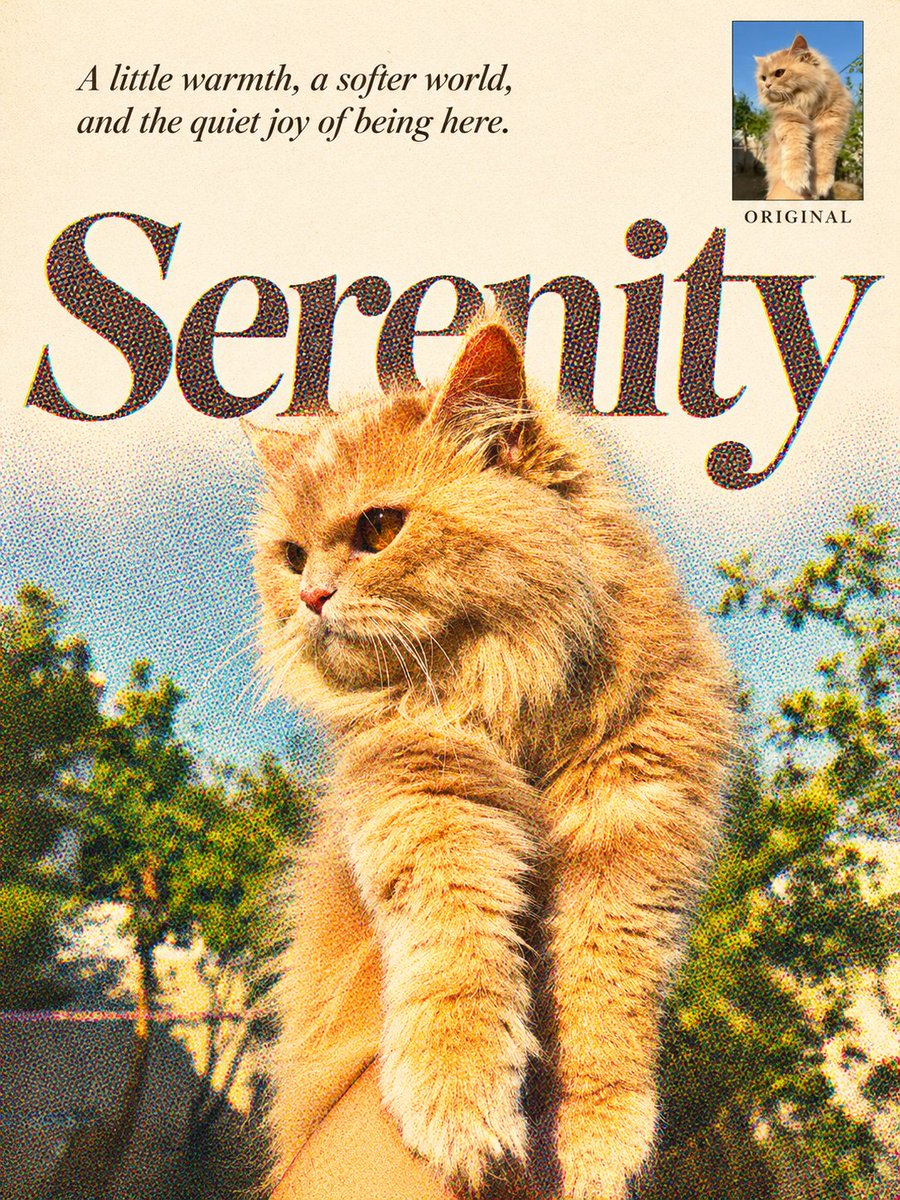
Create a poetic 3:4 vertical print poster using my uploaded photograph. First, carefully examine the photograph and identify its most distinctive elements that could naturally extend upward, such as flower branches, an animal’s head and neck, tree canopies, or other prominent subjects. Preserve the key elements of the original photograph and the spatial relationships between the main subject and its surroundings. OVERALL COMPOSITION: Design the entire poster as one continuous, seamless composition. Top section (approximately 1/3): Create clean, warm-white negative space featuring two short lines of English poetry that complement the mood and atmosphere of the photograph. Middle section: Select one short English word that reflects the photograph’s theme. Display it in large, elegant serif typography, stretching across the width of the composition. The oversized word must serve as the visual boundary between the upper negative space and the photograph below. Allow the main subject extracted from the original photograph to retain its realistic photographic appearance. Naturally extend it upward from the lower photographic scene, crossing the typographic boundary and partially overlapping some of the large letters as it enters the upper negative space. Maintain a believable physical connection between the subject and the original scene, with realistic overlap and depth, while ensuring that the word remains clearly readable. IMPORTANT: Do not create two separate images stacked on top of each other. The entire poster must feel like one continuous, integrated composition. PHOTOGRAPHIC TREATMENT AND ATMOSPHERE: Apply a noticeable artistic atmospheric treatment to the main photograph. Choose lighting and colour grading that complement the original image, such as golden sunset light, soft spring sunlight, tranquil twilight tones, or luminous water reflections. Enhance the emotional atmosphere while preserving the recognisability and essential details of the original photograph. COLOUR PRINT HALFTONE EFFECT: Incorporate fine, clearly visible, colourful circular halftone printing dots within the oversized typography and the stylised photographic areas. - Use cyan, blue, magenta, and yellow dots. - Allow subtle misregistration between the coloured dots to create an authentic vintage CMYK printing effect. - Make the halftone dots denser in darker areas and more widely spaced in brighter areas. - Preserve the main subject’s realistic photographic texture. - Keep the upper warm-white negative space relatively clean and uncluttered. ORIGINAL PHOTO INSET: Place a small thumbnail of the original, unedited photograph in the upper-right corner, occupying approximately 15–18% of the poster's total width. - Display the complete original photograph without any artistic filters or stylisation. - Add a delicate, thin border. - Include a small, neat "ORIGINAL" label. - Ensure the thumbnail does not obstruct the main typography or the subject extending across the visual boundary. FINAL ART DIRECTION: Maintain a restrained, poetic, sophisticated aesthetic with the appearance of a premium vintage editorial magazine print. Ensure all text is correctly spelled, accurately rendered, and visually balanced. No additional titles, watermarks, unnecessary text, or unrelated decorative elements.

GPT Image 2.5
Create a vertical 3:4 artwork split into two equal horizo...
海报与版式3:4

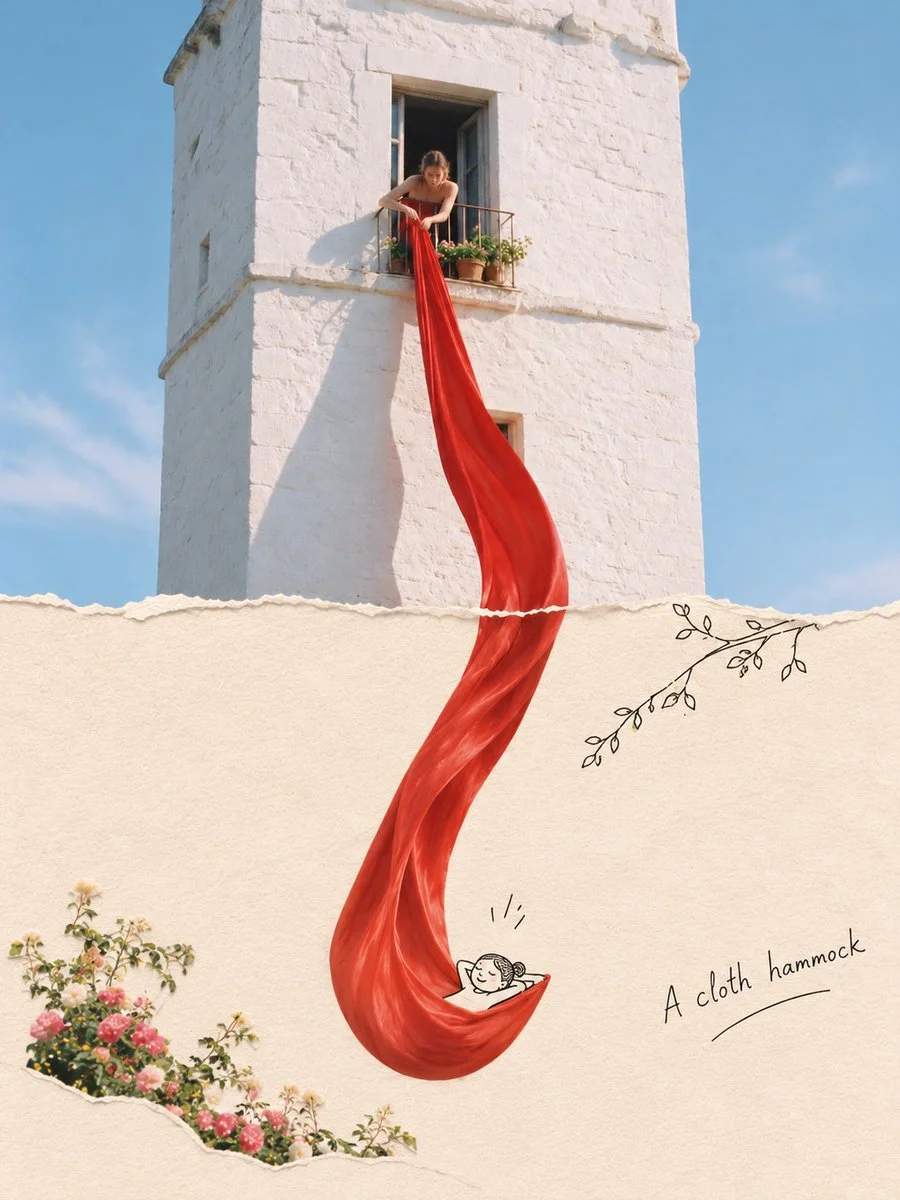
Create a vertical 3:4 artwork split into two equal horizontal halves. Upper half: Preserve the original photograph exactly. Keep its subject, composition, colors, lighting, and details unchanged. Lower half: Transform the scene into a warm ivory paper collage with subtle texture and minimal hand-drawn illustrations. Choose one natural element from the photograph and extend it seamlessly across the center boundary into the lower world. Reimagine it creatively as part of a tiny surreal scene. Add minimal details and one short handwritten caption (2–5 words). Keep the composition airy, elegant, playful, and visually connected. Avoid generic illustrations, unnecessary decorations, extra characters, and changes to the original photograph.

GPT Image 2.5
请将我上传的每一张照片分别制作成一张独立的高级设计海报,不多图拼接,每张照片单独输出。整体采用3:4竖版构图,上下两个区域高度严格1:1,各占画面50%。
海报与版式3:4

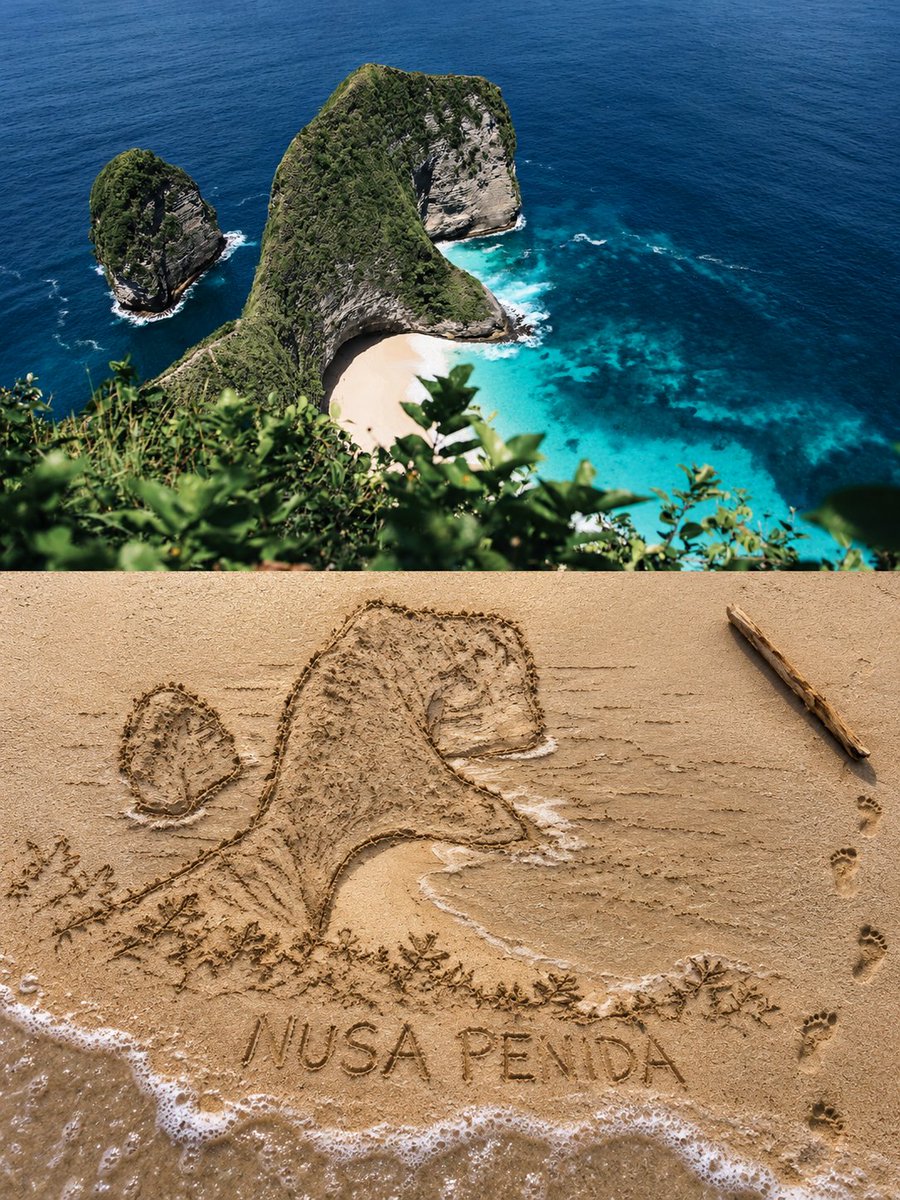
请将我上传的每一张照片分别制作成一张独立的高级设计海报,不多图拼接,每张照片单独输出。整体采用3:4竖版构图,上下两个区域高度严格1:1,各占画面50%。 上半部分保留原始照片,保持主体身份、结构、姿态、真实质感、自然光影和原有色彩氛围,仅进行轻微高级调色,使其具有艺术杂志、独立出版物与展览图像质感。为适配画幅,可自然扩展环境背景,但不得拉伸、扭曲或改变主体。上半部分只放上传的照片本身,沿用原有取景,不添加任何文字、边框或图形。 下半部分提取照片中最具识别性的场景、构图与景物位置,重构为一幅画在湿沙滩上的画:用树枝在平整的湿沙上划出整幅景,景物的位置、大小与照片一一对应,只有粗粗的凹槽线条;沙上有几处脚印和被浪冲淡的边缘。俯拍,沙滩占满下半部分。不要写实,不画细节,只用划出的线和被压平的面表达。 构图遵循“一片沙、一幅画”:画占下半部分约四分之三,居中;主体用深而连续的粗线勾出,次要的景物用浅而短的线;景物的上下左右位置照着原照片;画的下方有一道弯曲的浪线,浪线的前沿把沙面冲出一圈细细的泡沫和水痕;画旁有一排小小的脚印,通向画面外;一根树枝斜放在画的一角。 配色只用沙的颜色:湿沙的深褐、干沙的浅米、浪的淡蓝灰泡沫;除此之外不使用其他颜色;线条的深浅靠沙的湿度。 材质是真实的沙:沙粒清晰,划出的凹槽有侧光形成的阴影,边缘有细沙滑落,浪线处有薄薄的水膜和泡沫;不要数码平滑,也不要塑料感。 文字只出现在一处:画的下方沙上划出的一行、从照片提炼的地点的全大写英文名,用树枝写的粗线字。除此之外画面中不出现任何文字、字母、数字或标志。 整体呈现真实摄影 × 沙滩树枝画的视觉关系,安静、留白多、克制、有一点童心。避免写实的风景、彩色、多个画、卡通感、商业广告文案和模板感。

GPT Image 2.5
【整体构图】
海报与版式3:4

【整体构图】 生成一张独立的3:4竖版上下双拼图片,上下区域高度约1:1。上方仅展示上传的原照片或原始影像,下方仅展示同一个主体的风格转译。整张图片只包含一个主体,不增加第二个主体、不加入无关场景、不制作人物与宠物并列画面,也不增加第三个画面。原图与风格化主体均位于各自区域的稳定视觉中心,下方保留适当安全边距。 【上半部分|原图】 上传图是唯一的主体身份、结构与姿态依据。保留原图原有的摄影或影像质感、自然光线、场景、色彩和真实材质,不重绘原图,不为原图施加艺术滤镜。优先完整嵌入原图,以留白补齐版面;如需裁切,只能裁切无关背景,不能切掉关键识别点、改变主体比例或改变姿态。必须保留主体的轮廓、结构、颜色分区、材质特征、配饰、道具、视线、朝向和姿态。下半部分的任何特效都不得覆盖上方原图。 【下半部分|主体对应】 只转译原图中的核心主体及其实际存在的随身道具或附属结构,背景改为纯白。保持相同视角、朝向、视线方向和对应姿态;原图为局部或半身构图时,下方也优先采用对应范围;原图为全身或完整主体时,下方保留完整主体,不为填满画面而随意改变姿势。允许因风格改变比例、材质和结构,但主体辨识特征必须连续。不得替换主体、改变其身份、物种、类别、年龄感、颜色分区或核心结构,不得将非人主体强行拟人化。 【下半部分|玻璃质感核心风格】 呈现透明折射、边缘高光、真实玻璃厚度与插画化塑形。将主体本体重构为具有真实体积的玻璃艺术主体,主体的轮廓、结构、颜色分区和关键特征由不同的局部着色玻璃层塑造。采用从原图提取的主要颜色进行低面积着色,使身份在透明材质中仍然清楚。玻璃应具有厚实边缘、曲面折射、内部透射与适度叠层,高光方向统一,反射保持简洁。主体不是穿透明雨衣,也不是透明轮廓线或普通塑料玩偶。主体保持原有类别和结构,不拟人化。背景纯白,通过局部色彩、玻璃厚度、边缘明暗和自然接触阴影保证白底可读性。避免碎玻璃、复杂背景映射、彩虹偏光薄膜、金属反射和无意义光斑。 【中线与过渡】 以清楚的白色留白分界,玻璃高光仅靠近下方边缘。过渡仅用于辅助观看上下对应关系,不使用粗黑横线,不让主体跨线混合,也不把两种表现熔合成一个主体。 【统一质量与文字规则】 上下必须一眼认出是同一个主体,下方必须是明确的风格重构,而不是原图滤镜。线条、色块、明暗、材质与手作细节统一服务于同一风格,不混入无关画风。避免过度光滑、无意义的细节堆砌、随机装饰、额外结构、重复主体和比例错误。整张图片不得新增文字、字母、数字、标语、Logo、品牌名、水印、边框或可识别的界面文字。若上方原图本身含有文字,不得涂改原图;本次测试使用的新原图应从源头选用无文字服装、无品牌道具和无字背景。下方不得复制原图中的可读文字。

GPT Image 2.5
请将我上传的每一张照片分别制作成一张独立的高级设计海报,不多图拼接,每张照片单独输出。整体采用 3:4 竖版构图,上下两个区域高度严格 1:1,各占画面 50%。
海报与版式3:4

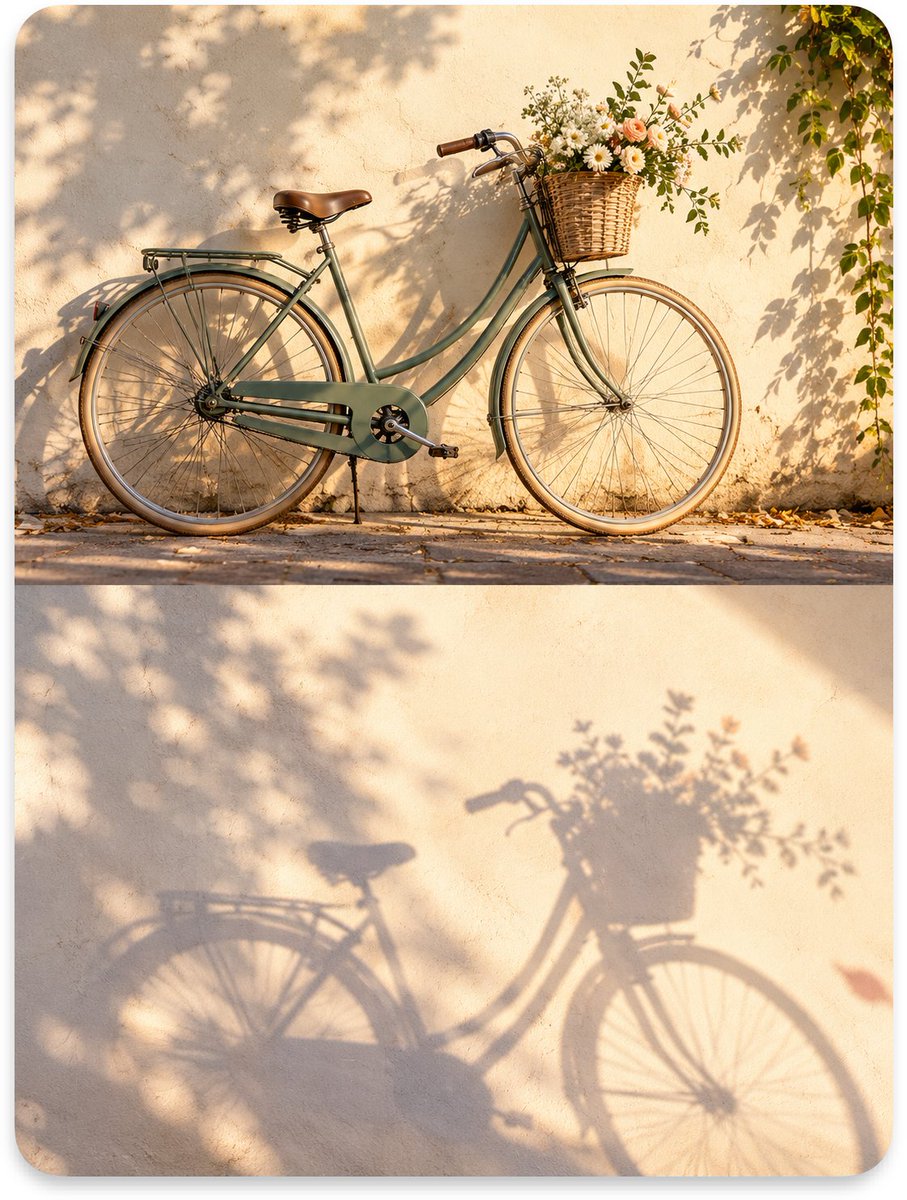
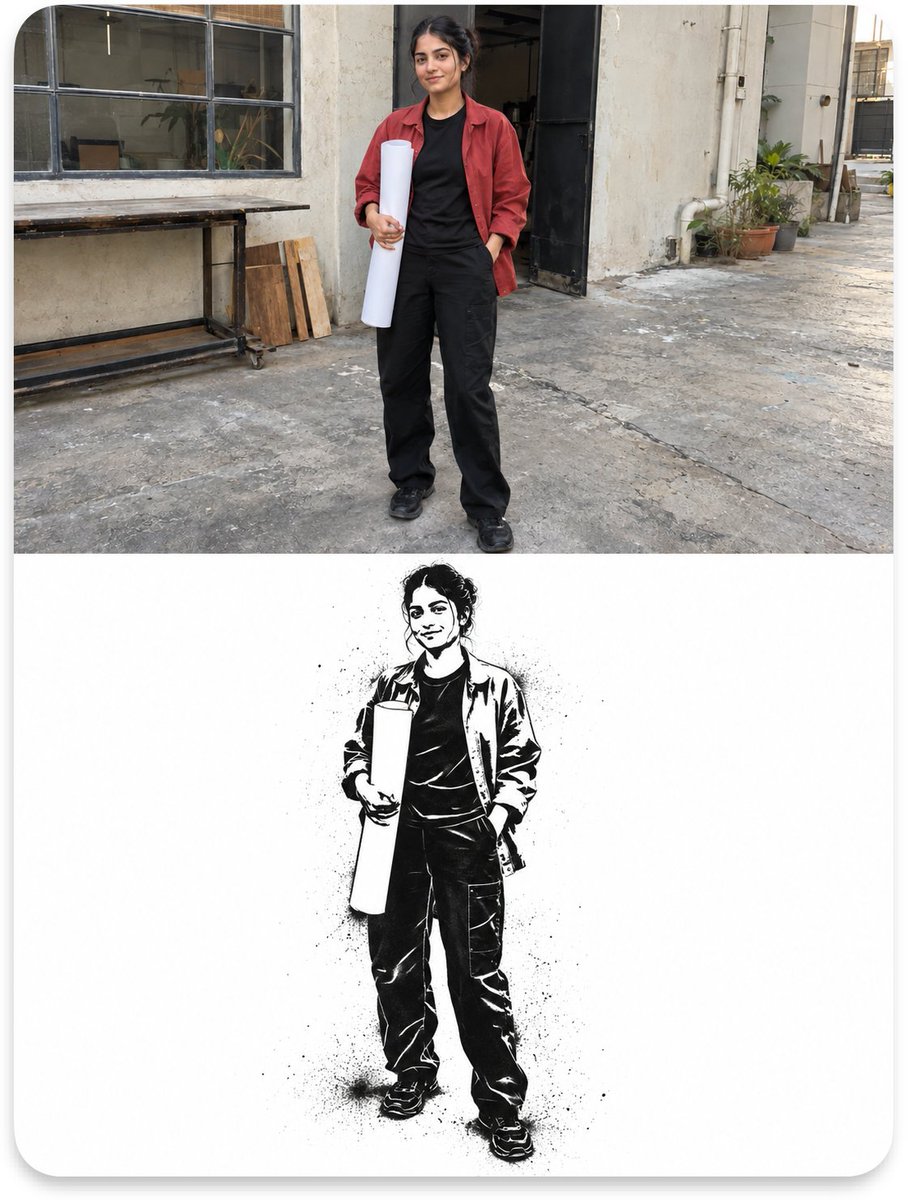
请将我上传的每一张照片分别制作成一张独立的高级设计海报,不多图拼接,每张照片单独输出。整体采用 3:4 竖版构图,上下两个区域高度严格 1:1,各占画面 50%。 上半部分保留原始照片,保持主体身份、结构、姿态、真实质感、自然光影与原有色彩氛围,仅进行轻微高级调色,使其具有艺术摄影与独立出版物质感。为适配画幅,可自然扩展环境背景,但不得拉伸、扭曲或改变主体。 下半部分不出现任何主体实物,只呈现**主体在午后阳光下投射在一面安静白墙或浅色纸面上的影子**。提取照片中最具识别性的轮廓、姿态、结构走势与叙事关系,将其转化为一个被拉长、轻微变形、边缘柔和的投影,使观者仅凭影子就能一眼认出上方照片中的对象。这是一次**只画影子、不画物体**的反向重构。 影子中可以叠加少量自然光影元素,例如树叶缝隙间漏下的光斑(komorebi)、窗格的斜影、纱帘的柔光或水面反射的晃动光纹,使主体之影与环境之光交织在一起,像一个被偶然看见的日常奇迹。可以在影子中保留一个极小的“错位细节”——影子与原物略有不同,多了一朵花、少了一个部分、姿态微微改变——带来安静的诗意与会心一笑。 材质强调真实光影摄影感:白墙或纸面的细微肌理、灰尘般的光颗粒、半影的柔和过渡、光斑边缘的自然虚化。影子不是纯黑剪影,而是带有环境色的半透明灰紫、灰蓝或暖灰。避免数码合成感、剪贴感和硬边矢量阴影。 构图以**大面积亮面留白**为主,影子可偏心、斜向延伸、局部出画,光斑在留白中零星分布,形成节奏。画面只保留一面墙、一束光与一个影子,不出现房间全景、家具或其他说明性元素。 配色以暖白、奶油米、浅杏为亮面,阴影使用灰紫、雾蓝、暖灰等带空气感的颜色;从上方照片中提取一种最温暖的颜色,作为墙面上一小块被光照亮的点睛色。 文字几乎不出现;如需要,仅在角落以极小铅笔字写一个时间或一个词,像光留下的注脚。 整体呈现**光、影、白墙、留白与一点点错位**构成的安静视觉。核心原则是:缺席比在场更有记忆,让影子替主体回到画面。避免出现主体实物、纯黑硬影、复杂场景、数码光效、滤镜感、模板感和过度煽情。

GPT Image 2.5
将输入照片做成左右渐隐对比的完整画面:一侧保持高保真原始摄影与真实材质,另一侧沿同一透视、同一物体位置和同一光影方向逐步退化为极细黑色手绘线稿,家具、建筑、植物和物件只保留结...
海报与版式3:4

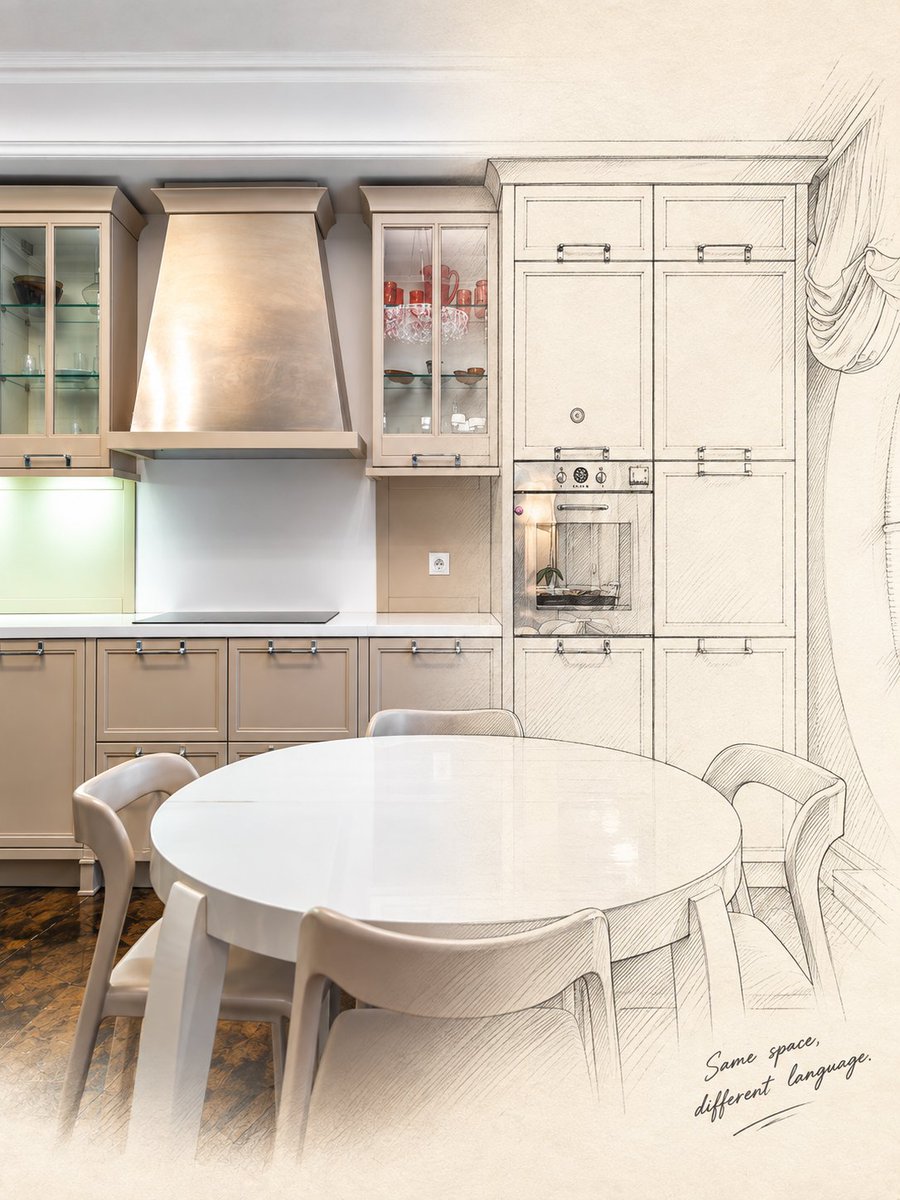
将输入照片做成左右渐隐对比的完整画面:一侧保持高保真原始摄影与真实材质,另一侧沿同一透视、同一物体位置和同一光影方向逐步退化为极细黑色手绘线稿,家具、建筑、植物和物件只保留结构轮廓与少量交叉线;渐变交界自然穿过物体,不做硬切,不复制第二个场景。背景使用温暖米白纸面和极少量原照片色块,加入一句手写观察,不加多余装饰、角标和假文字。

GPT Image 2.5
Use the uploaded image as reference.
海报与版式3:4

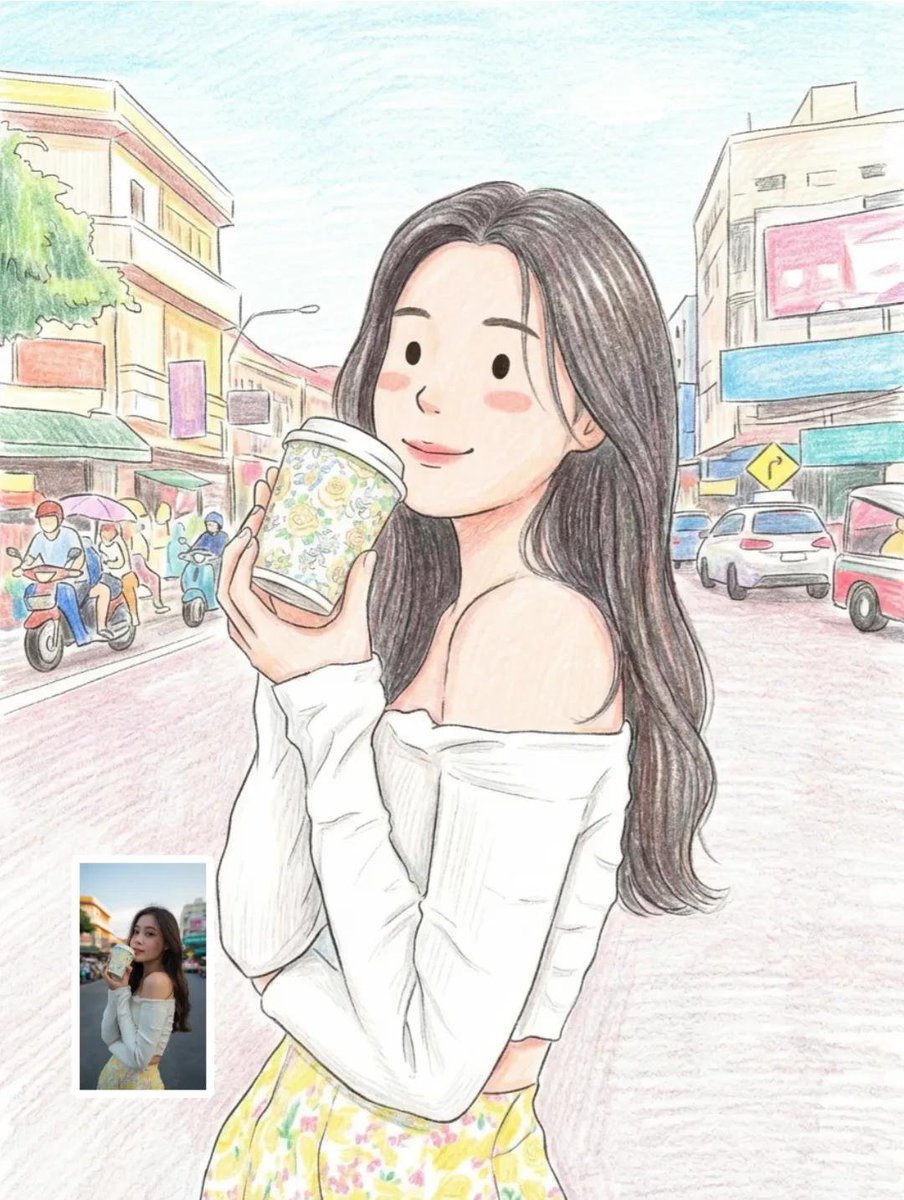
Use the uploaded image as reference. Illustration style: hand-drawn colored pencil illustration, clean line art with slightly rough pencil outlines, soft pastel coloring with increased brightness, lighter and more vivid color tones, enhanced saturation while staying natural, visible pencil strokes and gentle shading texture, warm and friendly tone, semi-cartoon realistic proportions, simple facial features with dot eyes and small smiles,flat yet detailed coloring, minimal shadows, soft highlights, storybook illustration feel, cozy and cheerful atmosphere, vibrant yet soft color palette, children-book / lifestyle sketch style, high clarity, no realism, no photo textureUse the uploaded image as reference. Hand-drawn colored pencil illustration with clean line art and slightly rough pencil outlines, combined with soft watercolor wash textures. Bright pastel colors, lighter and more vivid tones with natural saturation. Visible pencil strokes layered with subtle watercolor gradients. Warm and friendly tone, semi-cartoon realistic proportions. Simple facial features with dot eyes and small smiles.Flat yet detailed coloring, minimal shadows, soft highlights. Storybook illustration feel, cozy and cheerful atmosphere, children-book style, high clarity, no realism, no photo texture.

GPT Image 2.5
Transform each uploaded photo separately into an independent 3:4 vertical poster, witho...
海报与版式3:4

Transform each uploaded photo separately into an independent 3:4 vertical poster, without mixing images. The upper and lower halves should each occupy 50% of the composition, connected seamlessly at the center, with no visible frame or border. Upper Half — Original Photography Preserve the main subject, pose, proportions, spatial relationships, materials, lighting, and colors of the original photograph. Allow only subtle color correction, proportional cropping, or natural background extension. Do not distort, redesign, or alter the main subject. Lower Half — Abstract Graphic Interpretation Extract two or three recognizable visual characteristics from the same photograph, such as contours, movements, centers of gravity, or repeated visual rhythms. Use a minimal number of geometric color blocks, lines, cuts, overlapping printed shapes, and negative space to transform these features into independent abstract symbols that express movement and dynamic tension. Do not draw a complete representation of the original subject. Do not simply repeat, mirror, or duplicate the photograph. Visual Style — Deconstructed Swiss Design Follow the principles of digital imagery and deconstructed Swiss graphic design, emphasizing a single strong visual focus, restrained composition, and generous negative space. Extract one or two dominant colors and one supporting accent color from the original photograph. Combine these colors with a warm-white background, flat print-like color fields, extremely subtle paper grain, and slight local printing misregistration. Add only a few structurally meaningful lines, curves, and points. The design should feel experimental yet intentional, with strong visual rhythm, asymmetrical balance, and sophisticated editorial restraint. Typography Keep any text extremely small, understated, and readable. Typography should complement the composition without competing with the imagery. Restrictions Avoid large headlines, random fonts, watermarks, commercial UI elements, neon gradients, arbitrary geometric patterns, dense charts, heavy decoration, and outdated graphic design aesthetics. Final Aesthetic The finished poster should be concise, organized, contemporary, and visually striking, with a subtle handmade printing quality. Maintain a clear contrast between the realistic photographic upper half and the abstract graphic lower half while ensuring a seamless visual connection between them. The result should resemble a sophisticated experimental art poster created by an independent graphic designer, not a conventional photo collage or digitally filtered image.

GPT Image 2.5
Transform the uploaded reference photo into a charming, hand-drawn pastel crayon illust...
海报与版式3:4

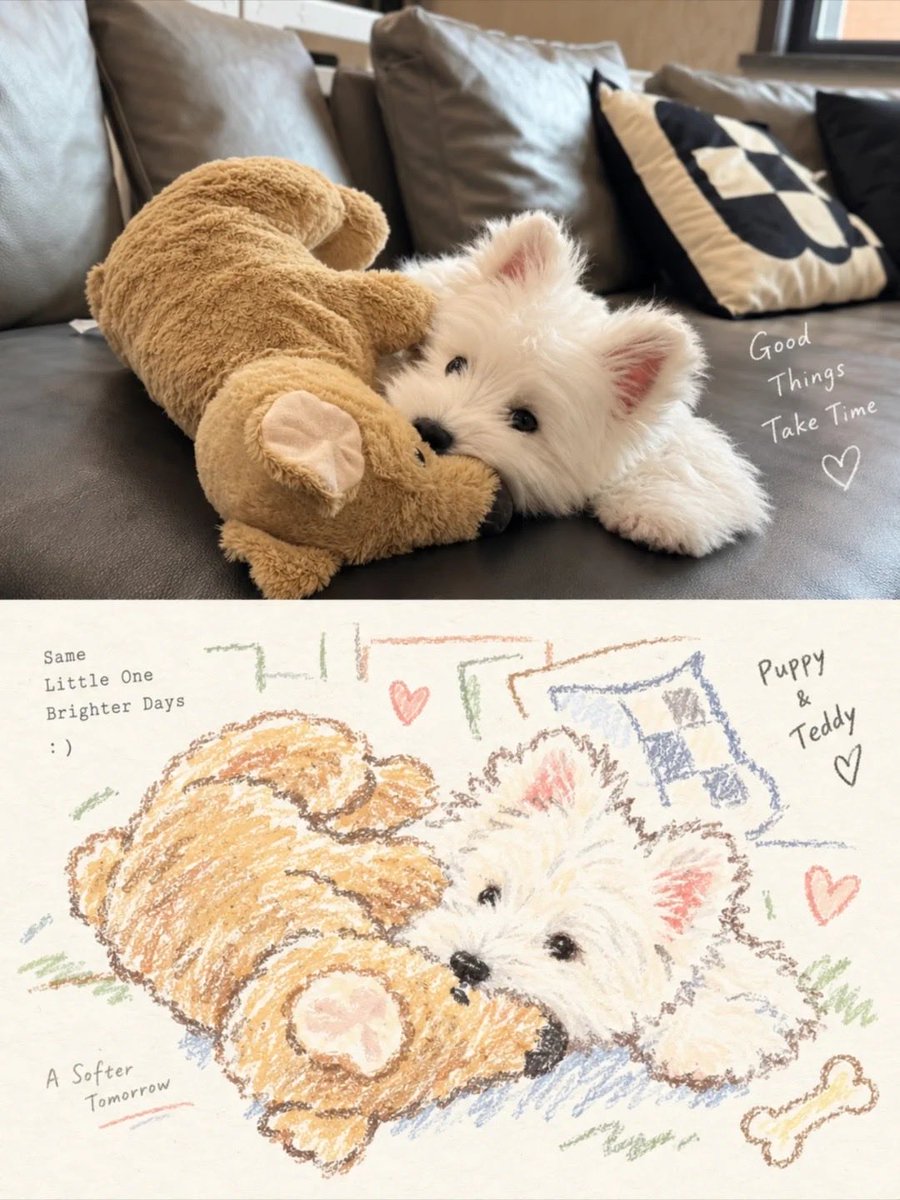
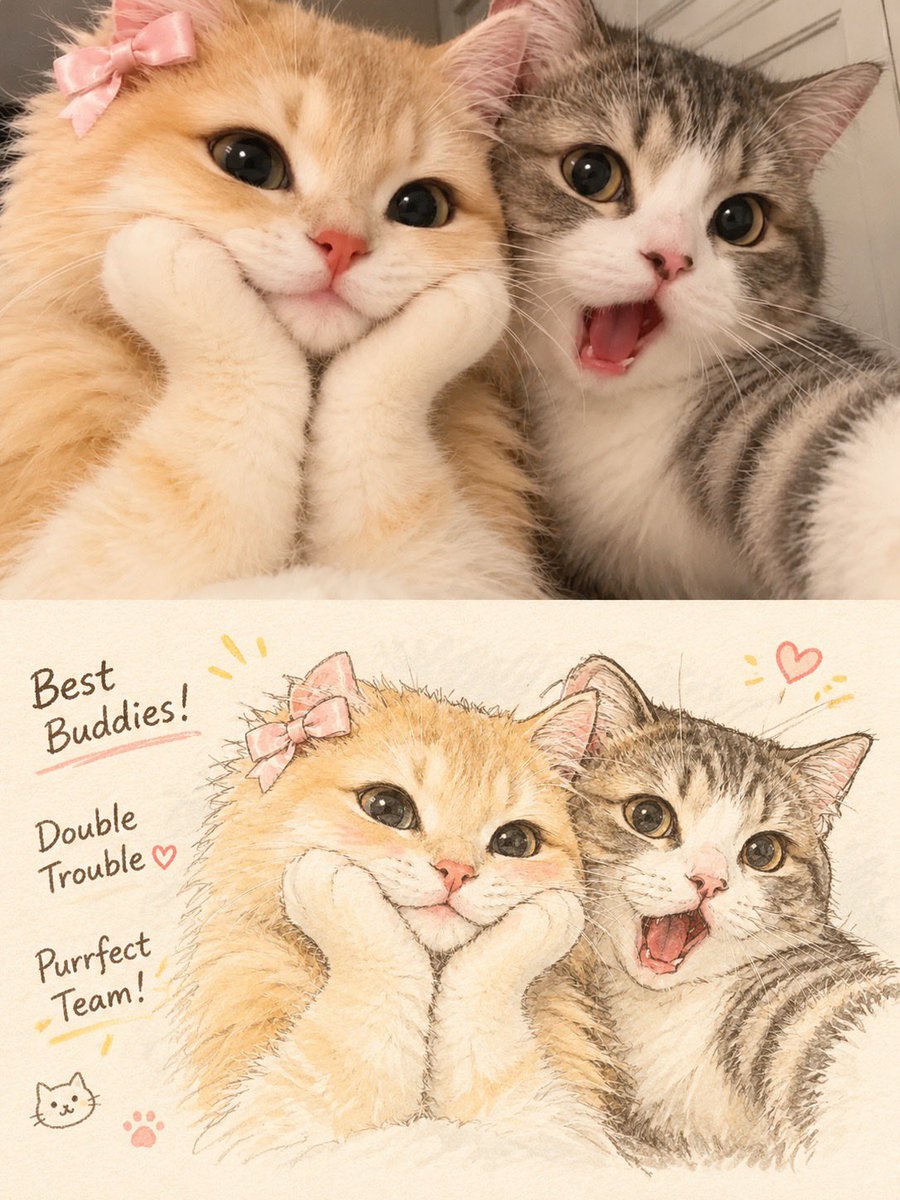
Transform the uploaded reference photo into a charming, hand-drawn pastel crayon illustration while preserving the original subject’s exact identity, facial features, expression, pose, proportions, clothing or accessories, and overall composition. Keep the pet exactly recognizable, including its fur color, eyes, body shape, and distinctive details. Recreate the image in a cute, nostalgic children’s storybook art style using soft wax crayons, colored pencils, and textured pastel strokes. Use a warm cream-colored textured paper background with visible paper grain, rough hand-drawn outlines, imperfect sketchy edges, and soft layered crayon shading. Add small playful hand-drawn doodles around the subject, such as hearts, flowers, stars, sunshine, grass, tiny decorative illustrations, and cute themed elements that complement the original scene. Include a few short handwritten phrases in a casual, childlike style to create a cozy scrapbook aesthetic. Use a soft, warm pastel color palette with natural earthy tones. Keep the subject large and central, with the same camera angle and framing as the original photograph. The final result should look like a beautiful handmade crayon drawing on vintage sketchbook paper, adorable, warm, playful, and full of personality. Do not change the subject or redesign the scene; only transform the photographic image into this illustrated art style.

GPT Image 2.5
Create a vertical 3:4 before-and-after image split into two stacked panels of equal hei...
海报与版式3:4

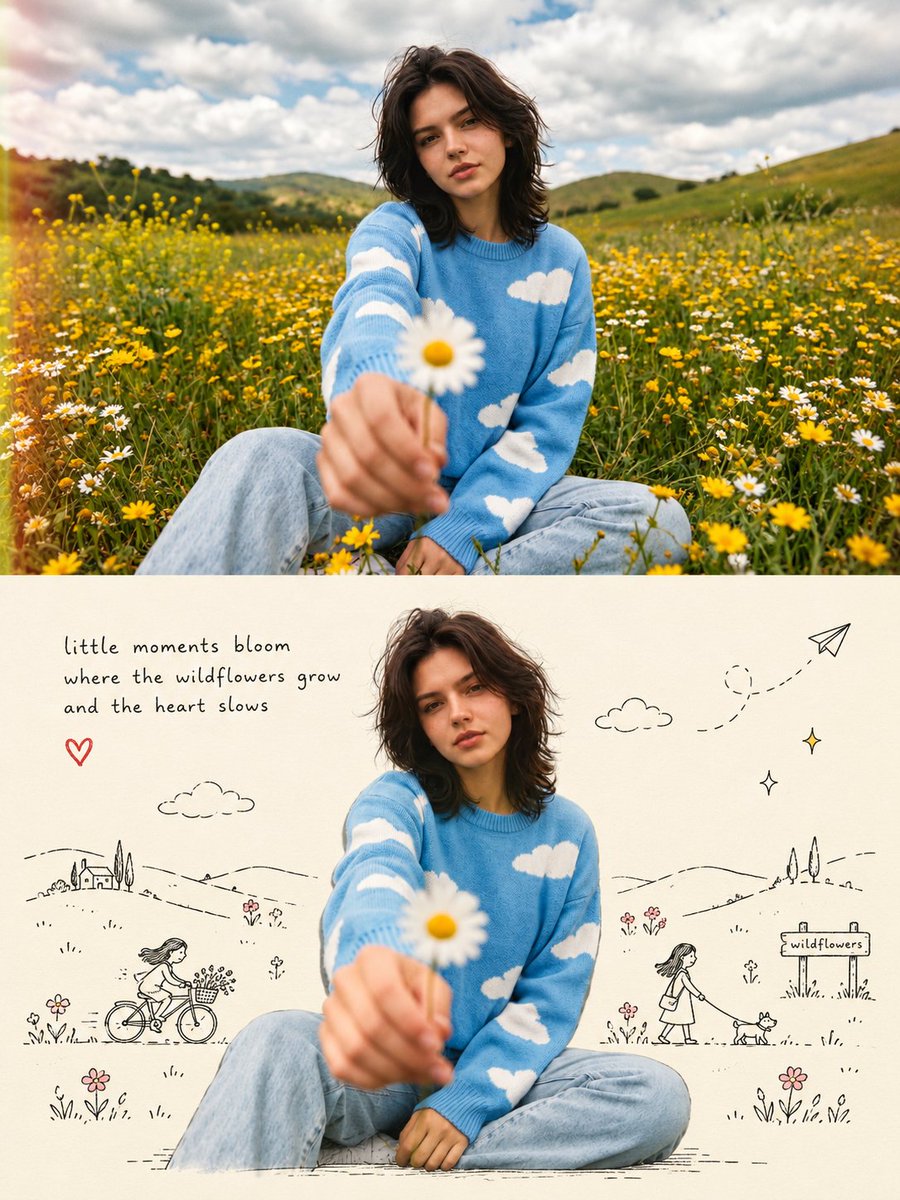
Create a vertical 3:4 before-and-after image split into two stacked panels of equal height. TOP PANEL (before): the original photograph exactly as provided, completely unedited - same subject, pose, background, colors and lighting. Full bleed to the panel edges. BOTTOM PANEL (after): the same person or people, still fully photographic and realistic, cut out from the original photo and placed centered on a warm cream off-white paper background. Keep their face, identity, expression, pose, clothing and proportions exactly as in the photo - never illustrate, stylize, smooth or redraw the subject. Clean cutout edges including hair. Replace the entire background with charming hand-drawn doodles in thin black pen line art - monoline, no fill, light and loose like a sketchbook, with a little character and personality in the linework. Use about eight doodle elements, balanced across the panel. Draw one or two simplified landmarks or buildings from the original background, one on each side of the subject at small scale. Add two or three small cartoon figures doing light actions that suit the scene - riding a bicycle, walking a dog, taking a photo, waving from a shop, holding a balloon. Add three or four small accents scattered in the open areas: a cloud, a sparkle or two, a paper plane with a dotted trail, a musical note, a few flowers or small plants near the ground. Compose it with breathing room. Keep every doodle at roughly a third of the subject's height or less, and rest the buildings and figures along a shared ground line so the panel has a clear horizon. Let the accents float higher in the empty upper corners to fill the space lightly. Leave a clear margin of untouched cream around the subject on all sides - doodles never overlap or touch them - and keep visible cream gaps between neighbouring elements so nothing clusters. Ground the subject with a thin sketchy horizontal line under the feet with a few short hatch marks and a soft natural shadow. Keep it light, not a dense scribble. Place a short handwritten caption in the open upper-left area: three lines, three to five words each, casual lowercase handwriting in thin black ink, warm and reflective in tone. Add one small red hand-drawn heart just below it with space around it. Everything in the lower panel is black line on cream, except three or four tiny color accents - a red heart, pink flowers, a yellow sparkle. The subject alone stays in full photographic color. Avoid: a cluttered or busy background, doodles filling every corner, doodles overlapping or touching the subject, large doodles rivaling the subject's size, three or more buildings, dense scribbled shadows, heavy thick linework, shading or crosshatching, long caption text, more than three lines of text, an illustrated or cartoon subject, changed face or identity, beautified skin, altered clothing or pose, colored or filled doodles, 3D rendering, side-by-side panels, watermark

GPT Image 2.5
Create a 3:4 vertical premium editorial poster based on the uploaded photo.
海报与版式3:4

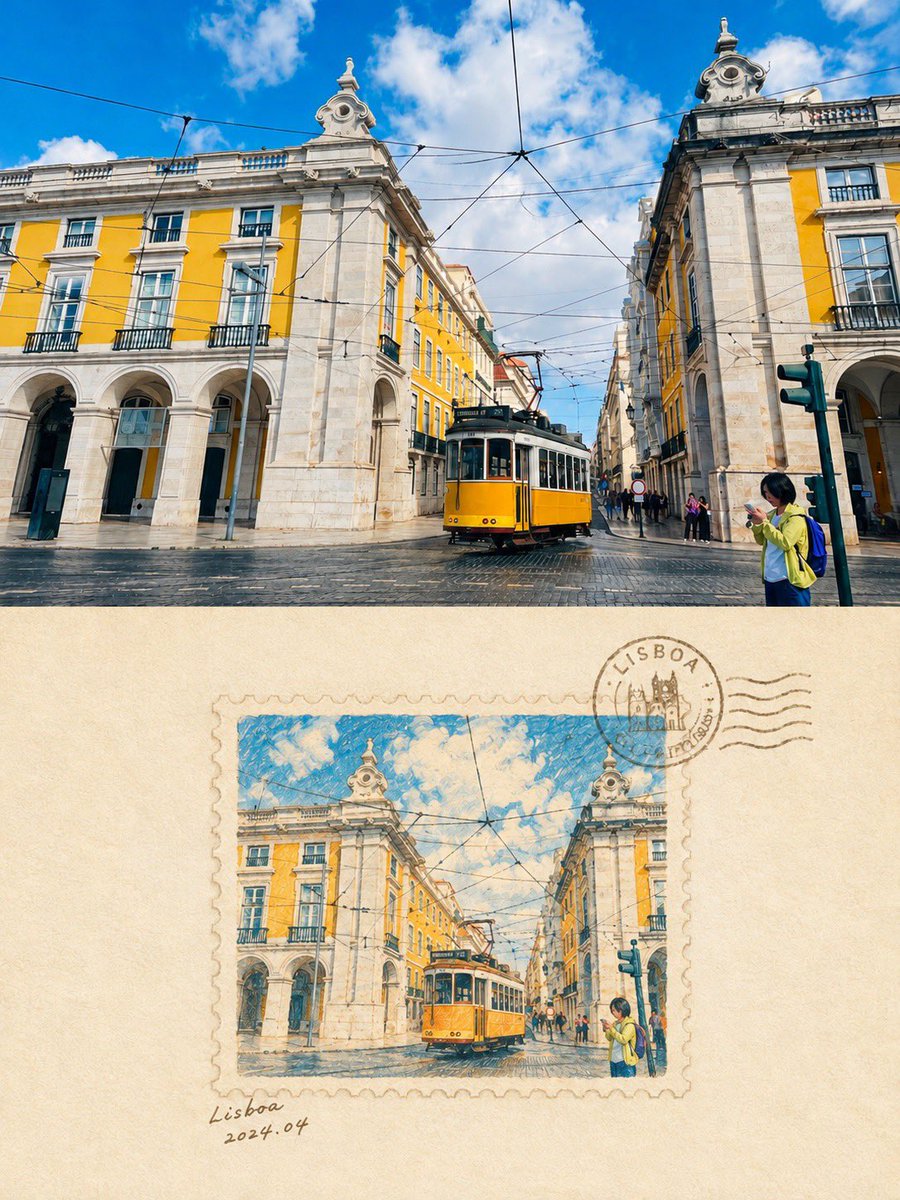
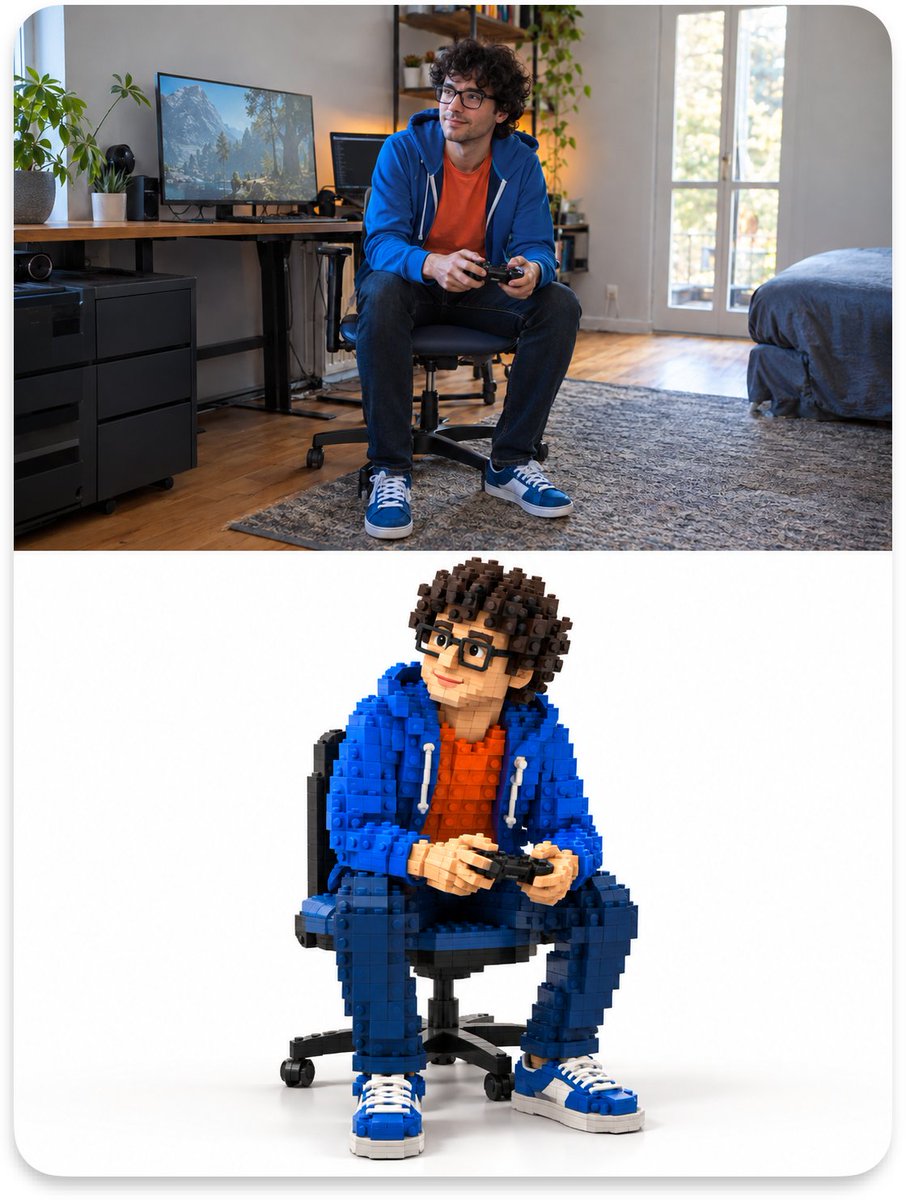
Create a 3:4 vertical premium editorial poster based on the uploaded photo. The final composition is divided into two equal horizontal sections (50% / 50%): Top half: Original photo Preserve the original photo exactly. Keep the subject, identity, pose, composition, lighting, colors, and realistic photography texture unchanged. Only apply subtle professional color grading and image enhancement. Do not redesign, distort, crop unnaturally, or alter important details. Bottom half: Vintage collectible stamp artwork Transform the same photo into a nostalgic handmade travel stamp illustration. The scene should become a small-scale collectible postage stamp placed on a large warm paper background. The stamp is the only clear visual focus, surrounded by generous negative space. Use minimalist editorial composition with strong visual hierarchy. The stamp can be centered, slightly offset, or partially cropped depending on the composition, but always maintain balance, breathing space, and a sense of a treasured travel memory. The illustration style: hand-drawn illustration colored pencil texture wax crayon marks acrylic paint blocks paper grain screen-print imperfections Make it feel like: a page from a vintage travel journal a preserved postcard collection an old handmade postage stamp The artwork should include: soft imperfect linework uneven hand-painted colors slight paint overflow visible paper fibers subtle printing flaws handmade warmth Avoid smooth digital illustration or vector style. Composition and background Use a warm ivory / cream textured paper background. Keep large areas of empty space. Remove unnecessary background details. Only preserve the most recognizable elements from the original scene. The stamp should become the emotional center of the image. Color palette Extract the most memorable colors from the original photo and redesign them into a limited vintage palette: cream white warm beige soft blue natural green muted yellow coral orange Colors should feel: warm calm nostalgic elegant collectible Avoid: dirty gray tones excessive vintage aging overly saturated colors childish colors Typography Add only subtle stamp-style details if needed: small handwritten notes vintage postage marks tiny travel labels miniature printed details Typography should feel like real stamp printing or travel journal notes, not a modern poster title. No large headlines, logos, watermarks, or obvious branding. Overall style Modern art book illustration + vintage travel postcard + collectible postage stamp aesthetic. The final image should feel like a precious travel memory preserved as a handmade stamp artwork. Output: A 3:4 vertical poster: Top 50% = original realistic photo Bottom 50% = vintage handmade stamp illustration based on the same photo Elegant, minimal, nostalgic, premium editorial design.

GPT Image 2.5
【整体构图】
海报与版式3:4

【整体构图】 生成一张独立的3:4竖版上下双拼图片,上下区域高度约1:1。上方仅展示上传的原照片或原始影像,下方仅展示同一个主体的风格转译。整张图片只包含一个主体,不增加第二个主体、不加入无关场景、不制作人物与宠物并列画面,也不增加第三个画面。原图与风格化主体均位于各自区域的稳定视觉中心,下方保留适当安全边距。 【上半部分|原图】 上传图是唯一的主体身份、结构与姿态依据。保留原图原有的摄影或影像质感、自然光线、场景、色彩和真实材质,不重绘原图,不为原图施加艺术滤镜。优先完整嵌入原图,以留白补齐版面;如需裁切,只能裁切无关背景,不能切掉关键识别点、改变主体比例或改变姿态。必须保留主体的轮廓、结构、颜色分区、材质特征、配饰、道具、视线、朝向和姿态。下半部分的任何特效都不得覆盖上方原图。 【下半部分|主体对应】 只转译原图中的核心主体及其实际存在的随身道具或附属结构,背景改为纯白。保持相同视角、朝向、视线方向和对应姿态;原图为局部或半身构图时,下方也优先采用对应范围;原图为全身或完整主体时,下方保留完整主体,不为填满画面而随意改变姿势。允许因风格改变比例、材质和结构,但主体辨识特征必须连续。不得替换主体、改变其身份、物种、类别、年龄感、颜色分区或核心结构,不得将非人主体强行拟人化。 【下半部分|积木艺术核心风格】 从原图中提取最具识别性的主体、轮廓、姿态与结构关系,理解其身份与气质,再重构为像素积木艺术。通过体素概括、真实ABS积木、模块化几何和合理拼搭重新组织主体,不是简单卡通化,不套用现成品牌人偶,也不混成无接缝的平滑体素。主体需保留一眼可辨的轮廓、颜色分区、关键结构和姿态,不强行拟人化。主体是唯一视觉核心,通过方块化比例、清晰剪影、模块层级和局部夸张建立辨识度。背景纯白、安静、低信息量,不还原完整环境,不铺设复杂地块和无关道具,只保留极少量自然接触阴影,形成鲜明主体、大面积留白、环境退后的设计收藏品陈列感。 从原图中提取辨识度最高的颜色并提升纯度与饱和度,用鲜红、亮黄、纯蓝、鲜绿、橙色、紫色等干净的注塑积木色组成稳定色块,同时保留原图的综合色彩身份,不把所有颜色强行替换成同一组。颜色比原图更明亮、更有能量,但禁止荧光、霓虹、糖果渐变、莫兰迪色、灰蒙色、粉彩化或刻意降低饱和度。真实哑光ABS表面应平整并具有柔和塑料反光,凸粒、拼接缝隙、模块厚度、层级和自然接触阴影清楚可见。柔和而明确的光线保持颜色鲜艳通透,避免金属、玻璃、过强电脑渲染反光和廉价游戏截图感。 不保留原图中的英文标题、标签词或微型注释;用主体轮廓与留白完成构图。真实影像与明艳积木重构形成明确的视觉对应,整体鲜活、清爽、可爱而不幼稚,具有高级玩具设计收藏品与现代编辑海报气质。避免灰脏色、复杂游戏场景、满地积木、儿童游戏界面和电商玩具展示感。 【中线与过渡】 使用干净的白色留白分界,并在下方加入少量积木阶梯轮廓,不遮挡上方原图。过渡仅用于辅助观看上下对应关系,不使用粗黑横线,不让主体跨线混合,也不把两种表现熔合成一个主体。 【统一质量与文字规则】 上下必须一眼认出是同一个主体,下方必须是明确的风格重构,而不是原图滤镜。线条、色块、明暗、材质与手作细节统一服务于同一风格,不混入无关画风。避免过度光滑、无意义的细节堆砌、随机装饰、额外结构、重复主体和比例错误。整张图片不得新增文字、字母、数字、标语、Logo、品牌名、水印、边框或可识别的界面文字。若上方原图本身含有文字,不得涂改原图;本次测试使用的新原图应从源头选用无文字服装、无品牌道具和无字背景。下方不得复制原图中的可读文字。

GPT Image 2.5
适用于任意真实照片,不局限于海洋、鱼类或自然题材。将输入图像转译为一张具有“标本页”气质的上下分区画面。
海报与版式2:3

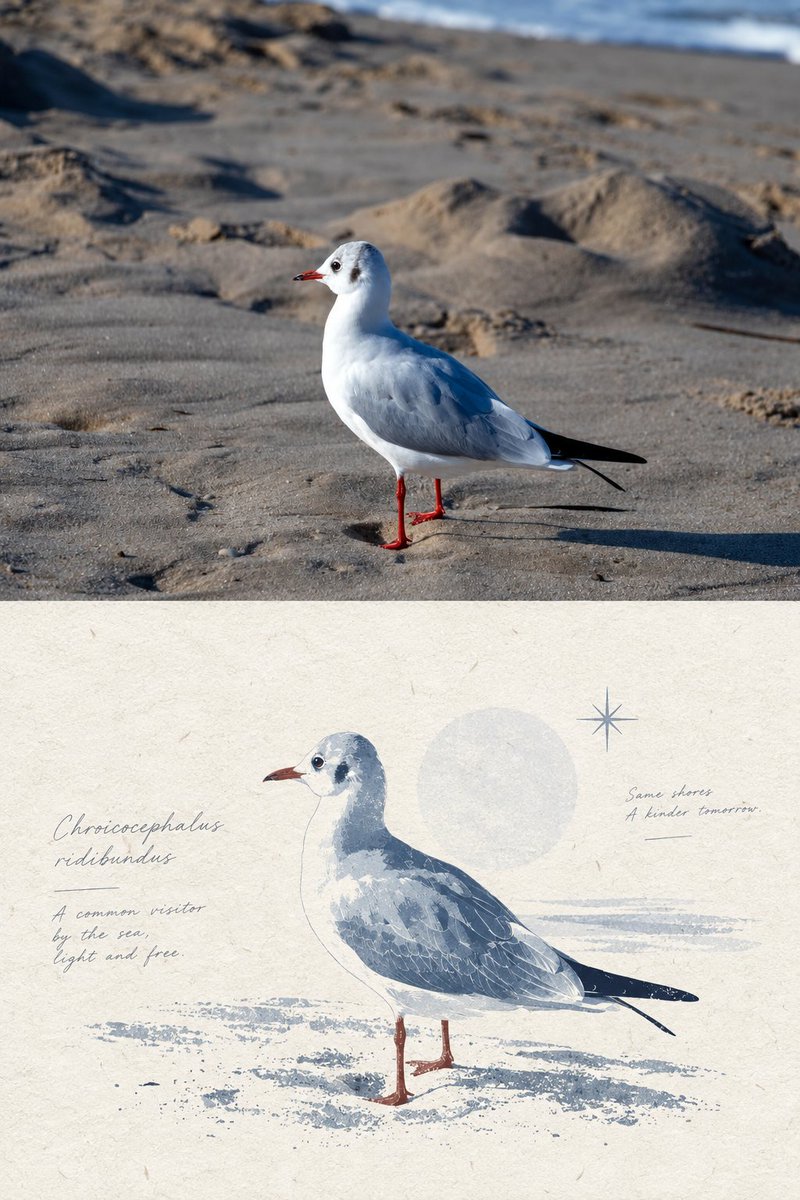
适用于任意真实照片,不局限于海洋、鱼类或自然题材。将输入图像转译为一张具有“标本页”气质的上下分区画面。 上半部分保留原始照片的真实摄影属性:包括主体与环境的自然纹理、反光、明暗层次、真实色彩和空间关系,使其像被直接截取或保留下来的视觉事实。不得过度滤镜化,不削弱原图的真实感。 下半部分在一张乳白或暖白色、带粗纤维质感的纸面上,以原图主体的轮廓为基础,重建为蓝灰色系的负空间剪影构图。主体的数量、大小比例、方向关系、疏密节奏和整体分布,应与原图保持呼应;但表达方式转为“留白中的轮廓占位”,让主体像被提炼成一种安静、克制的标本形态。 重点不是描绘细节,而是利用主体轮廓、空白区域和纸面呼吸感建立版式秩序。画面应保留大面积安静留白,使下半部分具有展签、图录或观察样本页般的陈列感。可加入极少量辅助图形元素,例如丝网印刷感的细小星芒、轻微透明叠色块、纤细手写说明或注记,但必须克制、稀疏,不喧宾夺主。 整体配色应根据输入照片自然适配,在统一的低饱和、轻雾感系统下协调上区与下区;其中下半部分以蓝灰、灰白、雾青等冷静色调为主。整体气质应安静、轻盈、留白充足,像“真实图像”与“纸上负空间标本”并置于同一页中。 避免:直接海报化装饰、过多图形元素、角标、信息框、厚重拼贴、过强的海洋主题暗示、写实描边插画、主体数量或方向被任意改写、下半部分过满或失去呼吸感。

GPT Image 2.5
将输入照片制作成上下对比:上半区保留真实宠物/主体及其环境;下半区把主体和一个关键环境线索转换为由许多独立方形浮雕砖组成的像素化马赛克壁面,砖块有真实厚度、釉面反光、粗糙边缘...
海报与版式3:4

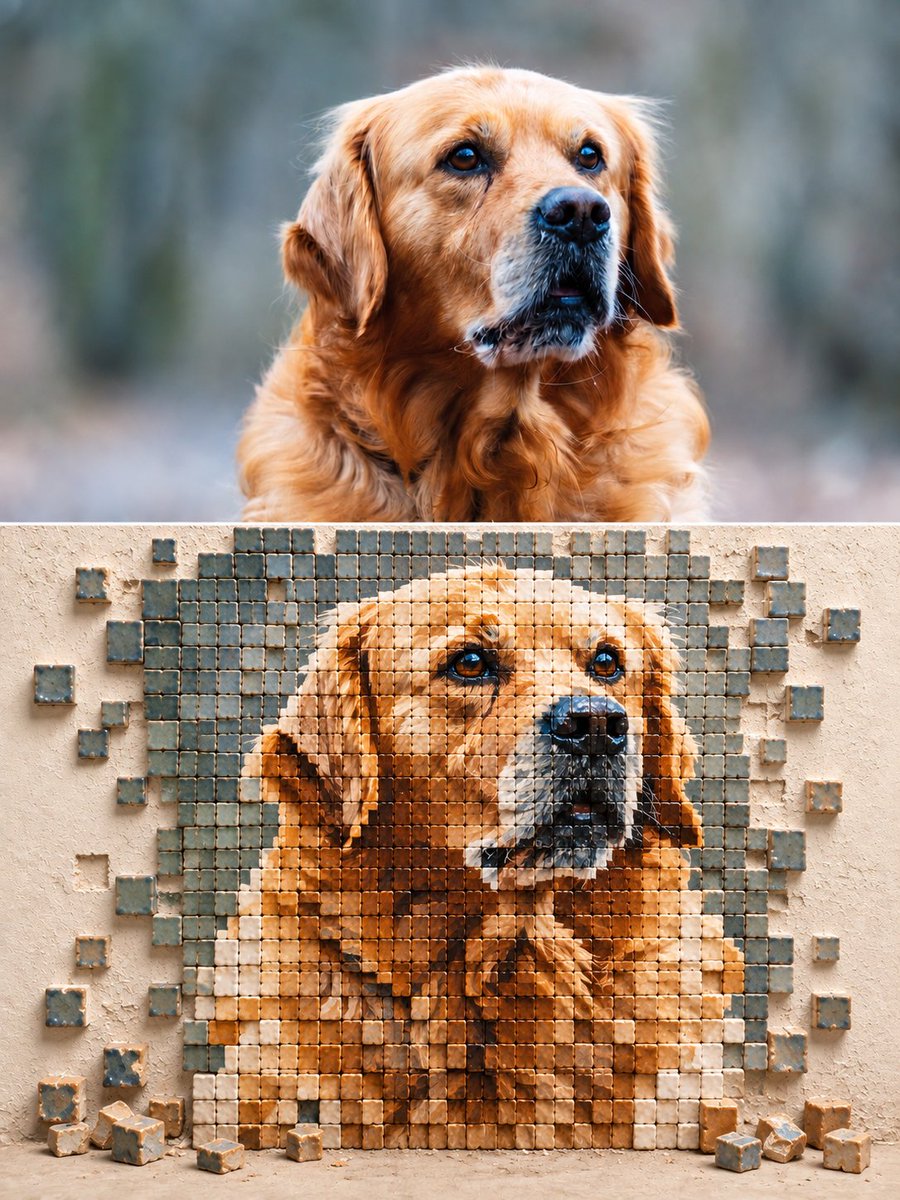
将输入照片制作成上下对比:上半区保留真实宠物/主体及其环境;下半区把主体和一个关键环境线索转换为由许多独立方形浮雕砖组成的像素化马赛克壁面,砖块有真实厚度、釉面反光、粗糙边缘、逐块阴影和少量脱落空位,颜色从原照片提取,不是平面像素滤镜。让主体轮廓仍清晰可认,周围保留温暖米白墙面、散落砖块和极简排版,可写一句短观察;禁止把所有元素做成同样密度,禁止角标和虚构文字。

GPT Image 2.5
Prompt:
海报与版式9:16

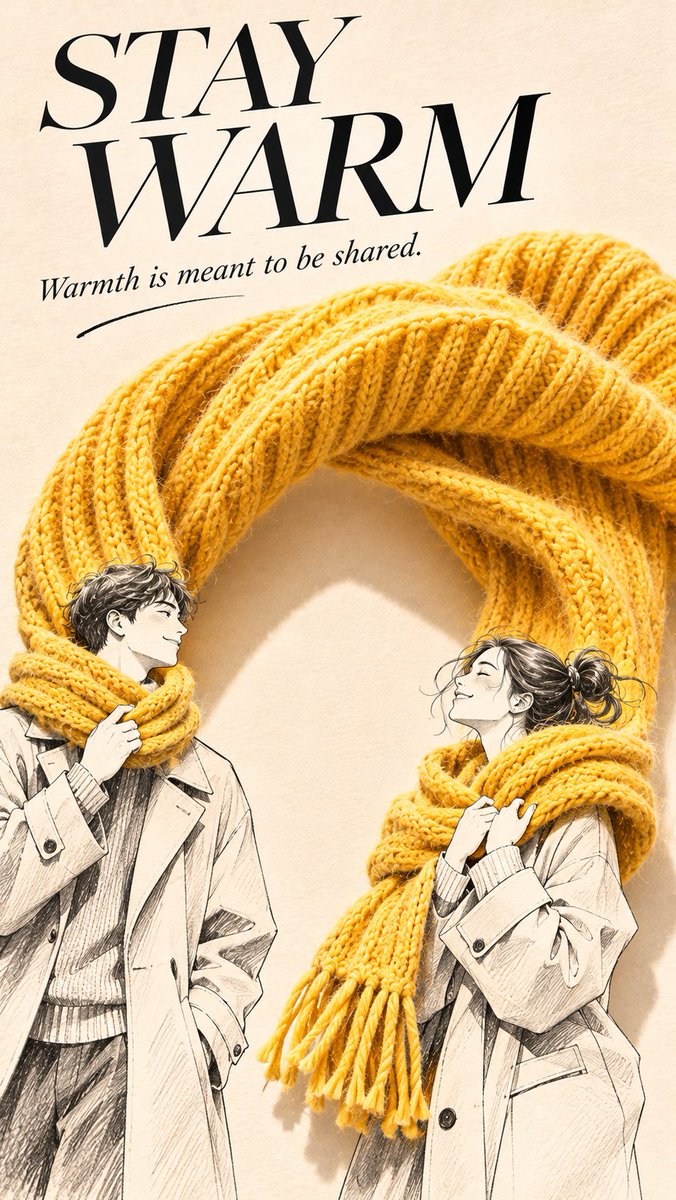
Prompt: [REALISTIC MATERIAL]: {Silk satin / Chunky knitwear / Sailcloth / Other fabrics} [ILLUSTRATED SUBJECT]: {Fashion model / Surfer / Two people / Sailor} [VISUAL INTERACTION]: {Describe how the real fabric transforms, flows, wraps around, or interacts with the illustrated subject} [ACCENT COLOR]: {Scarlet Red / Cobalt Blue / Butter Yellow / Emerald Green} [HEADLINE]: {Short English title, 1–3 words} [TAGLINE]: {One short, meaningful English sentence} [ASPECT RATIO]: 9:16 vertical Create a premium mixed-media editorial poster combining photorealistic fabric photography with elegant hand-drawn pencil illustrations. The central concept is a striking collision between 2D sketches and 3D reality. Render the [ILLUSTRATED SUBJECT] as refined black graphite line art with natural proportions, expressive poses, delicate shading, and sophisticated fashion-editorial aesthetics. Render the [REALISTIC MATERIAL] with exceptional photographic realism. Preserve authentic fibers, surface texture, folds, thickness, highlights, shadows, and natural material behavior. Use [ACCENT COLOR] as the dominant visual anchor. The fabric must physically interact with the illustration through [VISUAL INTERACTION]. Let realistic material emerge from sketched outlines, wrap around illustrated figures, overlap drawn elements, or transform into functional objects. Ensure convincing contact points, perspective, occlusion, and soft cast shadows. Composition: Use a warm ivory paper background with subtle texture and generous negative space. Create one bold, sculptural fabric shape occupying approximately 45–60% of the composition. Keep the illustrated subject clearly visible and the visual relationship instantly recognizable. Typography: Add [HEADLINE] in large, elegant, high-contrast editorial serif typography, inspired by luxury fashion magazines. Place [TAGLINE] beneath it in smaller refined italic text. Allow subtle interaction between the fabric and typography while keeping all words readable. English text only. Lighting: Soft directional studio lighting, realistic material reflections, natural shadow depth, and rich but controlled color contrast. The final result should feel like an internationally acclaimed fashion editorial: artistic, tactile, sophisticated, visually surprising, and immediately engaging. Avoid: Fully photorealistic people, cartoon characters, cheap CGI textures, floating fabrics without physical connections, cluttered backgrounds, excessive decoration, distorted anatomy, unreadable typography, extra text, logos, watermarks, numbering, and glass effects. Key principle: The fabric feels real. The characters remain hand-drawn. Their physical interaction makes the impossible feel believable.

GPT Image 2.5
using the uploaded photo, create a 3:4 vertical poster split into top and bottom halves...
海报与版式3:4

using the uploaded photo, create a 3:4 vertical poster split into top and bottom halves that touch seamlessly, with no white line, gap, or border between them. Top: the original photo, full-bleed. Bottom: a warm off-white textured paper background. The main subject is cut out, enlarged, and centered. Behind it, a thin horizontal rectangle shows a blurred crop of the original scene, and the subject breaks out of the frame (3D pop-out). The subject's base fades softly into the paper with natural particles, shadow, or reflection. Add small uppercase serif text in light grey with wide spacing: 3 short poetic lines at top-left and 2 lines with a "—" at bottom-right. Minimal gallery-poster style, photorealistic.

GPT Image 2.5
Transform the uploaded photograph into a beautiful, hand-drawn watercolor illustration...
海报与版式3:4

Transform the uploaded photograph into a beautiful, hand-drawn watercolor illustration comparison poster. LAYOUT & COMPOSITION: Create a vertical 3:4 poster divided into two equal horizontal sections. TOP HALF — ORIGINAL PHOTO: Display the original uploaded photograph exactly as it is. Preserve the original subject, pose, clothing, background, lighting, colors, and composition without alterations. BOTTOM HALF — WATERCOLOR ILLUSTRATION: Recreate the exact same photograph as a delicate, hand-painted watercolor and colored-pencil illustration. Preserve the subject's identity, facial features, hairstyle, expression, clothing, pose, proportions, and surroundings. Use soft watercolor washes, delicate ink outlines, visible pencil strokes, subtle paper texture, warm pastel tones, gentle shading, and beautifully imperfect hand-drawn details. Give the illustration a charming Korean/Japanese lifestyle sketchbook aesthetic. DECORATIVE DETAILS: Add handwritten playful typography that complements the subject and scene. Include small hand-drawn doodles such as hearts, stars, arrows, crowns, underlines, or sparkles. Generate a short, creative phrase that matches the subject's personality or mood. BACKGROUND: Maintain the original environment but reinterpret it with loose watercolor brushstrokes, simplified scenery, and soft artistic details. OVERALL STYLE: Dreamy, cozy, youthful, elegant, artistic, and slightly whimsical. Use warm off-white textured watercolor paper as the illustration background. IMPORTANT: - Keep the original photograph completely unchanged in the top section. - The bottom illustration must clearly depict the exact same moment. - Do not invent additional people or objects. - Maintain strong visual similarity to the original photograph. - Make the typography look naturally handwritten, not digitally typeset. - Ensure a clean 50/50 split with balanced composition. High-quality editorial art poster, 3:4 vertical aspect ratio.

GPT Image 2.5
UNIVERSAL PROMPT - TEXTURED PALETTE KNIFE IMPASTO OIL PAINTING | 1:1
海报与版式2:3

UNIVERSAL PROMPT - TEXTURED PALETTE KNIFE IMPASTO OIL PAINTING | 1:1 Transform the main subject in the uploaded photograph into a square miniature oil painting using a bold, heavily textured palette knife impasto technique. 1. PAINTING STYLE — EXTREME 3D TEXTURE Apply thick, generously layered oil paint using bold palette knife strokes, creating a raised impasto surface that appears to protrude 3–5 mm from the canvas. - Preserve visible directional knife marks, grooves, ridges, and uneven paint textures. - Assume light comes from the upper left. Add bright highlights to raised paint and deep shadows to recessed and overlapping areas. - Introduce subtle shadows along paint edges to create the illusion of individually layered, dimensional paint. - Preserve the original subject's recognizable silhouette, essential colors, and overall composition, but simplify its form into expressive, thick paint masses rather than realistic photographic details. - Avoid excessive detailing. Use a restrained number of bold, sculptural palette knife strokes while keeping the subject instantly recognizable. 2. BACKGROUND Use a consistent warm ivory or creamy-white watercolor paper background with a subtle, slightly rough texture. Keep the background completely flat and understated to emphasize the dimensionality of the painted subject. 3. TYPOGRAPHY Add a small black handwritten-style title in a lower corner or the area with the most negative space. Automatically identify the subject and generate suitable text: - Food / Drinks: Dish or beverage name (e.g., Pancake, Earl Grey Cake). - Products: Product name or category. - People: Name or a short expressive phrase representing the subject. - Animals: Animal name or species. - Landscapes: Location name or a short descriptive phrase. Use natural, slightly irregular, casually handwritten lettering. Avoid overly polished or standard-looking typography. 4. FORMAT & COMPOSITION - Aspect ratio: Strictly 1:1 square. - Position the main subject centrally. - Maintain generous negative space around the subject. - Show only the original main subject without introducing additional props or decorative objects. - Keep the overall composition minimal, balanced, and visually refined. FINAL RESULT: A premium miniature impasto oil painting with dramatically raised palette knife textures, realistic paint depth, expressive sculptural strokes, and a warm minimalist presentation. Preserve the identity of the original subject while transforming it into a tactile, three-dimensional painted artwork.

GPT Image 2.5
【整体构图】
海报与版式3:4

【整体构图】 生成一张独立的3:4竖版上下双拼图片,上下区域高度约1:1。上方仅展示上传的原照片或原始影像,下方仅展示同一个主体的风格转译。整张图片只包含一个主体,不增加第二个主体、不加入无关场景、不制作人物与宠物并列画面,也不增加第三个画面。原图与风格化主体均位于各自区域的稳定视觉中心,下方保留适当安全边距。 【上半部分|原图】 上传图是唯一的主体身份、结构与姿态依据。保留原图原有的摄影或影像质感、自然光线、场景、色彩和真实材质,不重绘原图,不为原图施加艺术滤镜。优先完整嵌入原图,以留白补齐版面;如需裁切,只能裁切无关背景,不能切掉关键识别点、改变主体比例或改变姿态。必须保留主体的轮廓、结构、颜色分区、材质特征、配饰、道具、视线、朝向和姿态。下半部分的任何特效都不得覆盖上方原图。 【下半部分|主体对应】 只转译原图中的核心主体及其实际存在的随身道具或附属结构,背景改为纯白。保持相同视角、朝向、视线方向和对应姿态;原图为局部或半身构图时,下方也优先采用对应范围;原图为全身或完整主体时,下方保留完整主体,不为填满画面而随意改变姿势。允许因风格改变比例、材质和结构,但主体辨识特征必须连续。不得替换主体、改变其身份、物种、类别、年龄感、颜色分区或核心结构,不得将非人主体强行拟人化。 【下半部分|模板喷漆核心风格】 呈现模板喷漆形成的硬边黑块、局部overspray喷雾颗粒与高对比。将原图中的轮廓、结构转折、颜色边界和关键识别点组织为可实际切割与喷涂的模板结构。用负形保留主体的关键特征、轮廓和姿态;硬边与黑块应具有节奏,不把所有细节变成无法辨认的大黑团。局部喷雾、细小漏喷与粗糙印刷痕迹服务于手作感,噪点只出现在主体及其紧邻区域,不得盖住关键识别点。主体应重绘为模板插画,而不是在真实原图上叠加红黑滤镜。背景纯白并保留呼吸感,不增添墙体、标语、贴纸文字或满幅污点。 【中线与过渡】 少量红黑喷雾颗粒停留在中线下方,不侵入上方原图。过渡仅用于辅助观看上下对应关系,不使用粗黑横线,不让主体跨线混合,也不把两种表现熔合成一个主体。 【统一质量与文字规则】 上下必须一眼认出是同一个主体,下方必须是明确的风格重构,而不是原图滤镜。线条、色块、明暗、材质与手作细节统一服务于同一风格,不混入无关画风。避免过度光滑、无意义的细节堆砌、随机装饰、额外结构、重复主体和比例错误。整张图片不得新增文字、字母、数字、标语、Logo、品牌名、水印、边框或可识别的界面文字。若上方原图本身含有文字,不得涂改原图;本次测试使用的新原图应从源头选用无文字服装、无品牌道具和无字背景。下方不得复制原图中的可读文字。

GPT Image 2.5
请将我上传的每一张照片分别制作成一张独立的高级设计海报,不多图拼接,每张照片单独输出。整体采用 3:4 竖版构图,上下两个区域高度严格 1:1,各占画面 50%。
海报与版式3:4

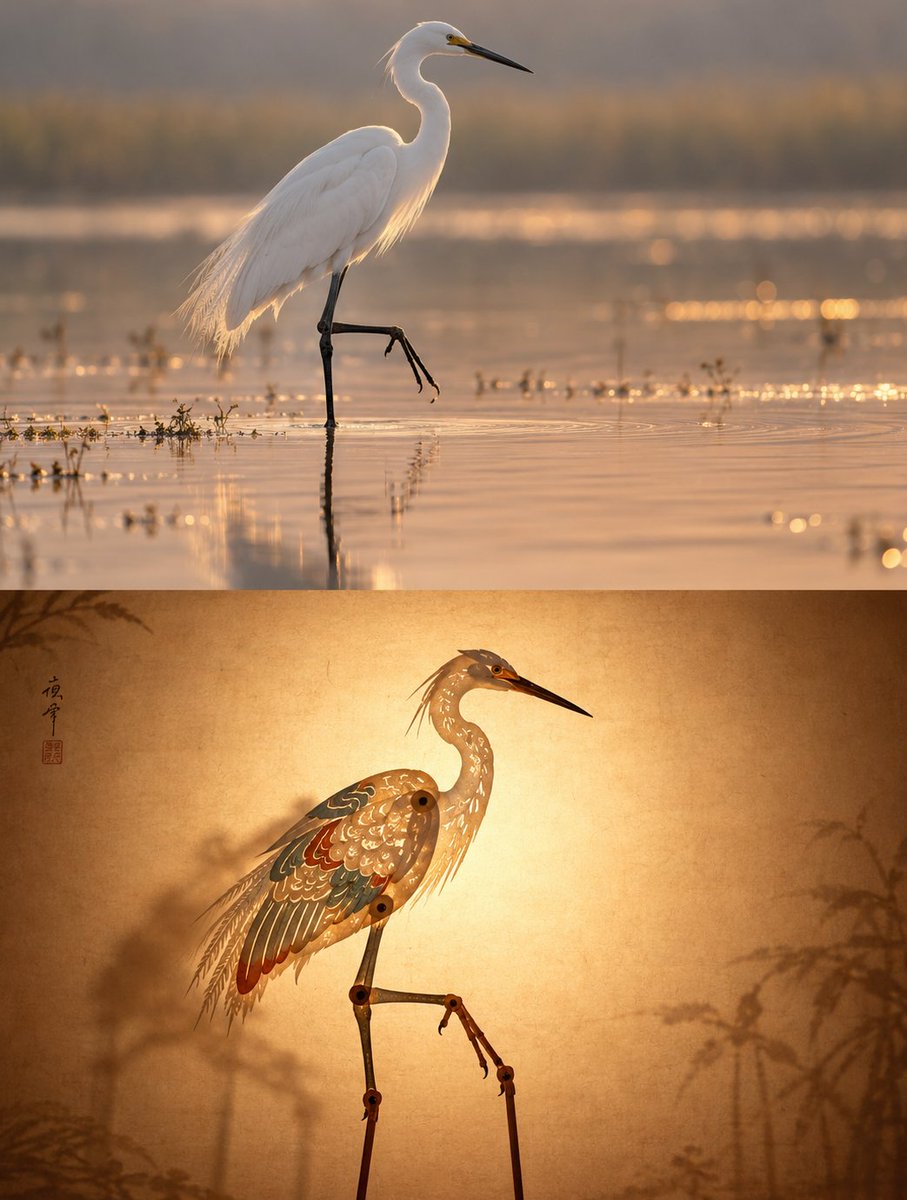
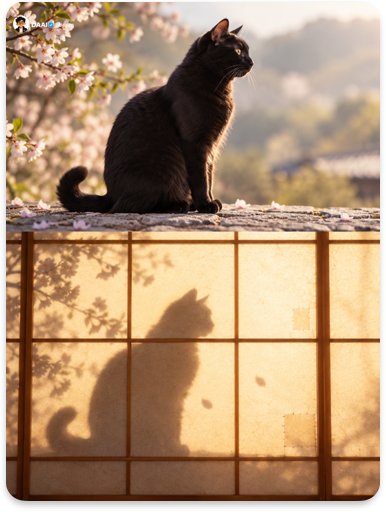
请将我上传的每一张照片分别制作成一张独立的高级设计海报,不多图拼接,每张照片单独输出。整体采用 3:4 竖版构图,上下两个区域高度严格 1:1,各占画面 50%。 上半部分保留原始照片,保持主体身份、结构、姿态、真实质感、自然光影与原有色彩氛围,仅进行轻微高级调色,使其具有艺术摄影与东方展览图像质感。为适配画幅,可自然扩展环境背景,但不得拉伸、扭曲或改变主体。 下半部分提取照片中最具识别性的**主体、轮廓、姿态与叙事关系**,重构为一具**中国传统皮影戏偶 / shadow puppet**,在一面被暖光照亮的半透明宣纸幕布上演出。无论原图是人物、动物、建筑、植物、器物还是风景,都被理解为一个“可以被操纵的角色”:主体被拆分为少量关节部件,以铆钉相连,姿态取自原照片中最有表情的那个瞬间,并配有一两根细长的操纵竹签自画面下方伸入。 不要写实描绘,不要卡通化,而是用皮影的造型语法重新概括:侧面化、平面化、装饰性镂空、云纹与几何雕刻纹样、局部的半透明彩染。保留原物最具识别度的特征,使观者一眼认出,同时感到它被一位老手艺人重新理解和雕刻过。 光影是这件作品的灵魂:幕布后方一盏暖色灯光,使皮影的镂空处透出温暖光点,彩染部分呈现半透明的朱红、靛青、橄榄绿与琥珀黄,皮影边缘带有柔和的投影虚边和轻微光晕,仿佛正在缓慢移动。可以有极轻微的双影或动态虚影,表现戏偶正在演出的一瞬间。 构图以**一幕一偶 + 大量留白**为核心。幕布是一片温暖的米黄或浅琥珀色光场,四周自然暗下,主体只占画面约25%–35%,可偏心或位于黄金分割位置,其余空间保持安静,像戏开场前的停顿。不出现观众、舞台全景或复杂道具。 配色从上方照片中提取 2–3 种最具情绪价值的颜色,转译为皮影彩染的半透明色,与暖灯光场统一;阴影使用深褐与暖墨色,而不是冷黑。 文字少量介入,可以竖排小字的方式写一个“戏名”或一句短句,像戏班手写的节目单,安静落在幕布一角,不限制语种。 整体呈现**皮影镂刻、半透明彩染、暖灯幕布、柔和投影与东方留白**共同构成的光影视觉。核心原则是:把照片里的主角请上幕布,让它用一个姿态演完一整出戏。避免完整写实、满场景堆砌、廉价国潮、塑料质感、3D渲染、卡通感和模板化海报。

GPT Image 2.5
请用这张照片制作一套 2027年1-12月份桌历,一张图上包含12个月,风格偏 国际化日历,节日、假期、月份内容等都要适合国际使用。
海报与版式2:3

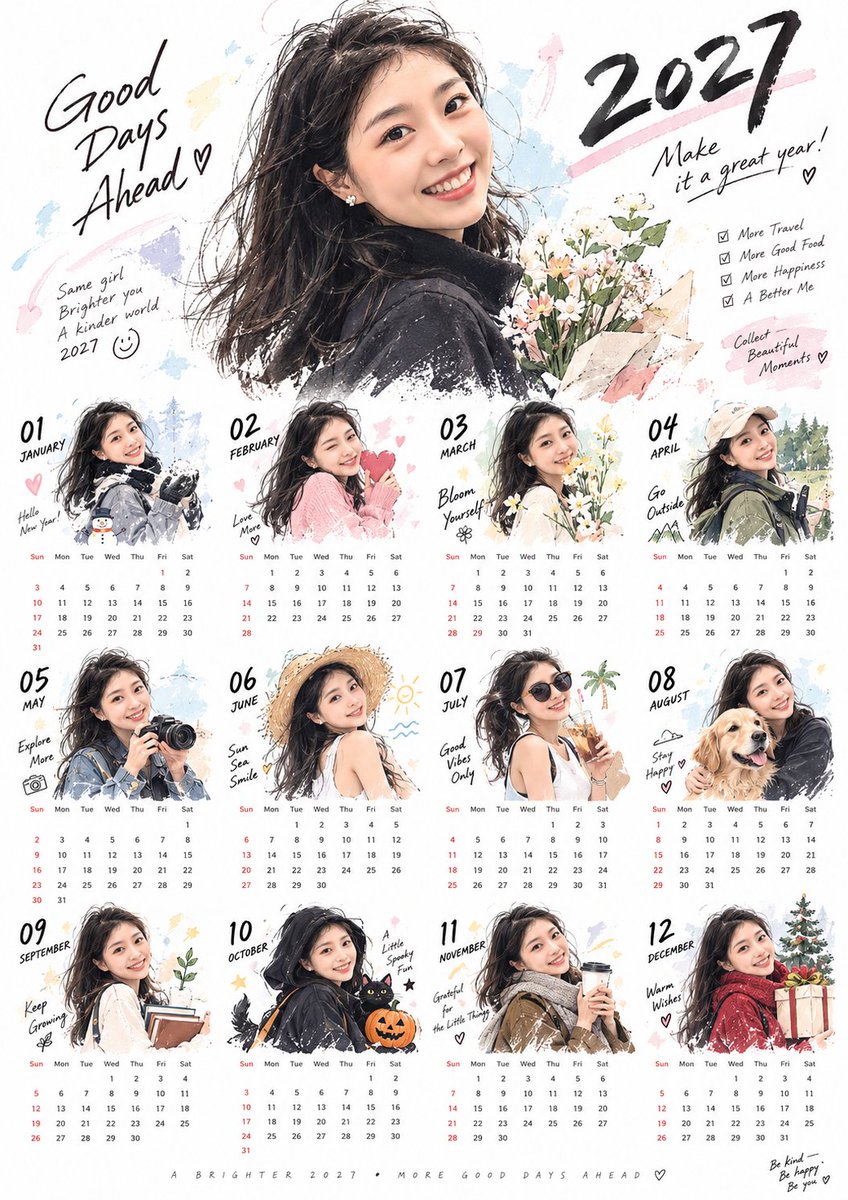
请用这张照片制作一套 2027年1-12月份桌历,一张图上包含12个月,风格偏 国际化日历,节日、假期、月份内容等都要适合国际使用。 格式:A4竖版 风格要求: 韩系插画风、角色特征鲜明、情绪自然表情、全身构图、动态姿态、服装细节精致、手绘涂鸦风、泼墨笔触、随性线条、粉彩与墨色混合、漫画草稿质感、白色简约背景、周围点缀符号化元素、氛围感强、高细节、高品质。

GPT Image 2.5
Create a premium artistic travel poster inspired by the uploaded photograph. Use a soph...
海报与版式3:4

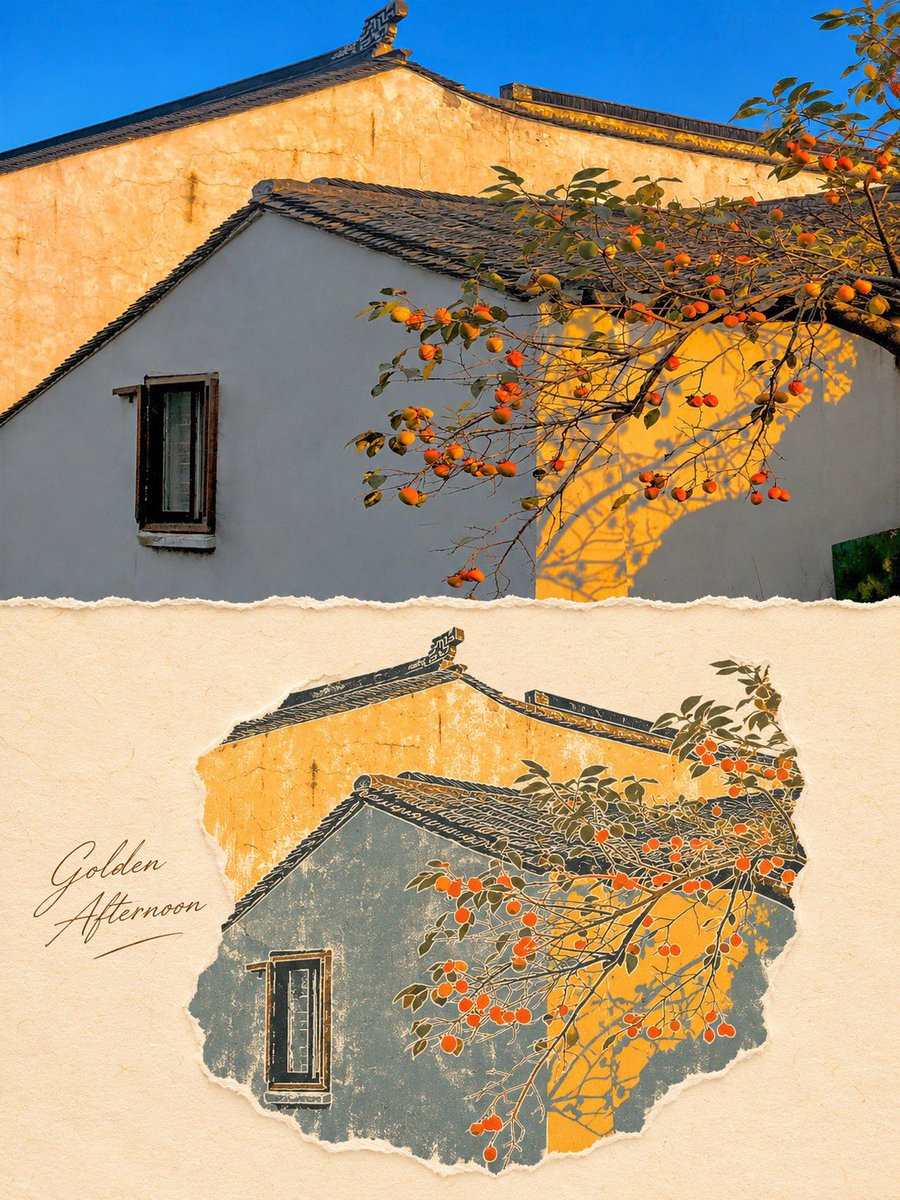
Create a premium artistic travel poster inspired by the uploaded photograph. Use a sophisticated 3:4 vertical composition divided into two sections. TOP HALF (50%): Preserve the original photograph as a breathtaking, photorealistic landscape. Maintain natural lighting, realistic textures, atmospheric depth, and the original scene's composition. BOTTOM HALF (50%): Transform the main subject or location into a beautiful hand-drawn editorial illustration. Use Japanese vintage poster aesthetics, delicate ink outlines, watercolor textures, geometric shapes, abstract patterns, botanical elements, and flowing organic lines. DESIGN STYLE: Minimalist Japanese-inspired graphic design, Scandinavian aesthetics, muted navy blue, warm terracotta, dusty beige, soft grey, and off-white palette. Add subtle paper grain, imperfect hand-painted textures, collage elements, and carefully balanced negative space. LAYOUT: Keep the illustration centered and visually connected to the photograph above. Add small decorative details, geometric frames, dotted patterns, and elegant botanical sketches. Include a tiny Japanese-inspired typography element at the bottom. Overall aesthetic: Premium art gallery poster, vintage travel magazine, contemporary Japanese illustration, sophisticated editorial composition, handcrafted artistic finish. High detail, clean composition, beautiful visual balance, professional graphic design, 3:4 portrait ratio.

GPT Image 2.5
Task: Create a 3:4 Split-Panel Photo-to-Japanese Illustration Poster
海报与版式2:3

Task: Create a 3:4 Split-Panel Photo-to-Japanese Illustration Poster Transform the uploaded photograph into a vertically composed 3:4 comparison poster. The upper half displays the original photograph, while the lower half features a Japanese hand-drawn manga illustration with a limited-color print-poster aesthetic, faithfully redrawn from the same photograph. Divide the canvas into two equal horizontal sections, each occupying exactly 50% of the total height. Both sections must have the same width. The horizontal division should connect seamlessly, with no gap, border, overlap, or decorative separator. 1. Upper Half — Original Photograph - Preserve the original photograph exactly as it is. - Do not redraw, recolor, retouch, or add any text to the photograph. - Scale proportionally without stretching or distorting the image. - If necessary, crop peripheral background areas first while preserving the main subject and important visual details. - If the aspect ratio cannot be accommodated without compromising essential content, extend the edges with a light grayish-cream background. Never invent or reconstruct missing parts of the original photograph. 2. Lower Half — Japanese Hand-Drawn Illustration Redraw the photograph as a Japanese-inspired hand-drawn manga illustration with a minimalist, limited-color screen-print poster aesthetic. The original photograph is the exclusive source of the subject's identity, appearance, pose, structure, composition, layout, and relationships between objects. For people: - Preserve recognizable facial shape, hairstyle silhouette, expression, pose, gestures, and clothing category. - Simplify the face into clean manga-style shapes. - Render hair as grouped, flowing masses rather than individual strands. - Express clothing through elegant, simplified fashion silhouettes. For animals: - Preserve the species, body proportions, distinctive coat-color patterns, and pose. - Use simplified contours and flat color blocks to retain recognizability. For objects: - Preserve the original silhouette, essential structural details, and proportions. For landscapes and scenery: - Preserve the terrain, architecture, distribution of visible elements, and spatial depth. - Redraw the main landscape as a cohesive illustration rather than reducing it to an isolated object. Preserve all visible contact, overlap, and occlusion relationships. Depict only what is visible in the source photograph. Do not introduce new subjects, props, gestures, or structures outside the original image. If an additional style reference is provided, use it only for drawing technique, color palette, and layout. Never copy its subjects or content. 3. Linework and Color Treatment Use a consistent combination of delicate ink outlines, naturally simplified shapes, and limited-color flat fills. - Ink outline: Near-black "#02030B", with varied pressure, subtle line-weight changes, occasional pauses, and slightly irregular hand-drawn edges. - Keep internal lines minimal, retaining only the structural details necessary to define form. - Use clean, continuous, opaque color blocks. - Merge shadows into a small number of hard-edged color shapes. - Avoid individual hair strands, dense hatching, photorealistic textures, and excessive decorative detail. - Preserve the subject's essential natural colors and distinctive identifying color patterns. Lower-panel background: Light grayish cream "#ECEDE5". Primary accent: Warm red "#E9444B". Secondary accent: Muted blue-gray "#5296BD". Use red as the dominant accent and blue sparingly. Ensure that accent colors complement the subject without compromising its recognizability. on all sides. - Do not let the illustration touch the edges or fill the entire panel. - Do not use large background color blocks to fill the empty space. - Do not add a border around the illustration

GPT Image 2.5
请将我上传的每一张照片分别制作成一张独立的高级设计海报,不多图拼接,每张照片单独输出。整体采用 3:4 竖版构图,上下两个区域高度严格 1:1,各占画面 50%。上下两格在中...
海报与版式3:4

请将我上传的每一张照片分别制作成一张独立的高级设计海报,不多图拼接,每张照片单独输出。整体采用 3:4 竖版构图,上下两个区域高度严格 1:1,各占画面 50%。上下两格在中线处直接、干净地拼接,不加粗分隔条、边框、额外画格或标签;所有风格化处理、纸张肌理与色彩变化都只发生在下半部分。 上半部分保留原始照片,保持主体身份、数量、结构、姿态、朝向、真实质感、自然光影与原有色彩氛围,仅进行轻微高级调色,使其具有艺术摄影与东方展览图像质感。为适配画幅,可自然扩展环境背景,但不得拉伸、扭曲、镜像或改变主体;若上传的图像本身是插画,则上半部分照原样保留。 下半部分是一扇被室外光照亮的**和纸格子窗(障子)**,视角在屋内。上方照片中最具识别性的主体,此刻正位于纸窗之外,我们只能看到它被光投射在纸面上的**柔和剪影**:轮廓清楚但边缘虚化,近纸处清晰、远纸处朦胧,使人仅凭影子就一眼认出原物。 木格栅把纸窗分成规整的方格,剪影自然地横跨几个格子,被细木条轻轻切开,形成东方式的秩序与安静。可以在剪影上保留一个极小的动态细节,例如一根胡须、一片落下的花瓣、一缕热气,带来呼吸感。 材质强调真实和纸与木:纸面的纤维与微微不均的透光、木格栅的细木纹与柔和阴影、纸张上一两处修补的小方块。光线温暖柔和,像傍晚或清晨的斜光。避免数码剪影、纯黑硬边、3D 渲染和廉价日式元素堆砌。 构图:纸窗占满下半部分的大部分区域,格栅为背景秩序,剪影只占画面宽度约 30%–40%,偏心放置,纸窗明亮区域不少于 60%。不出现室内家具和人物。 色彩以暖白、米黄纸色为主,剪影为柔和的灰褐、灰紫或暖灰,从上方照片中提取一种颜色,只以纸窗外隐约透进来的一抹色光出现。 文字极少,可在纸窗一角以极小竖排字写一个词,或完全不写。 整体呈现**和纸格窗、柔和剪影、木格秩序与大片暖光留白**构成的东方静谧视觉。核心原则是:隔着一层纸,反而看得更清楚。避免纯黑硬影、满版格纹、廉价和风装饰、室内全景、卡通感和模板化海报。

GPT Image 2.5
Transform the uploaded photograph into a beautiful, hand-drawn colored-pencil illustrat...
海报与版式3:4

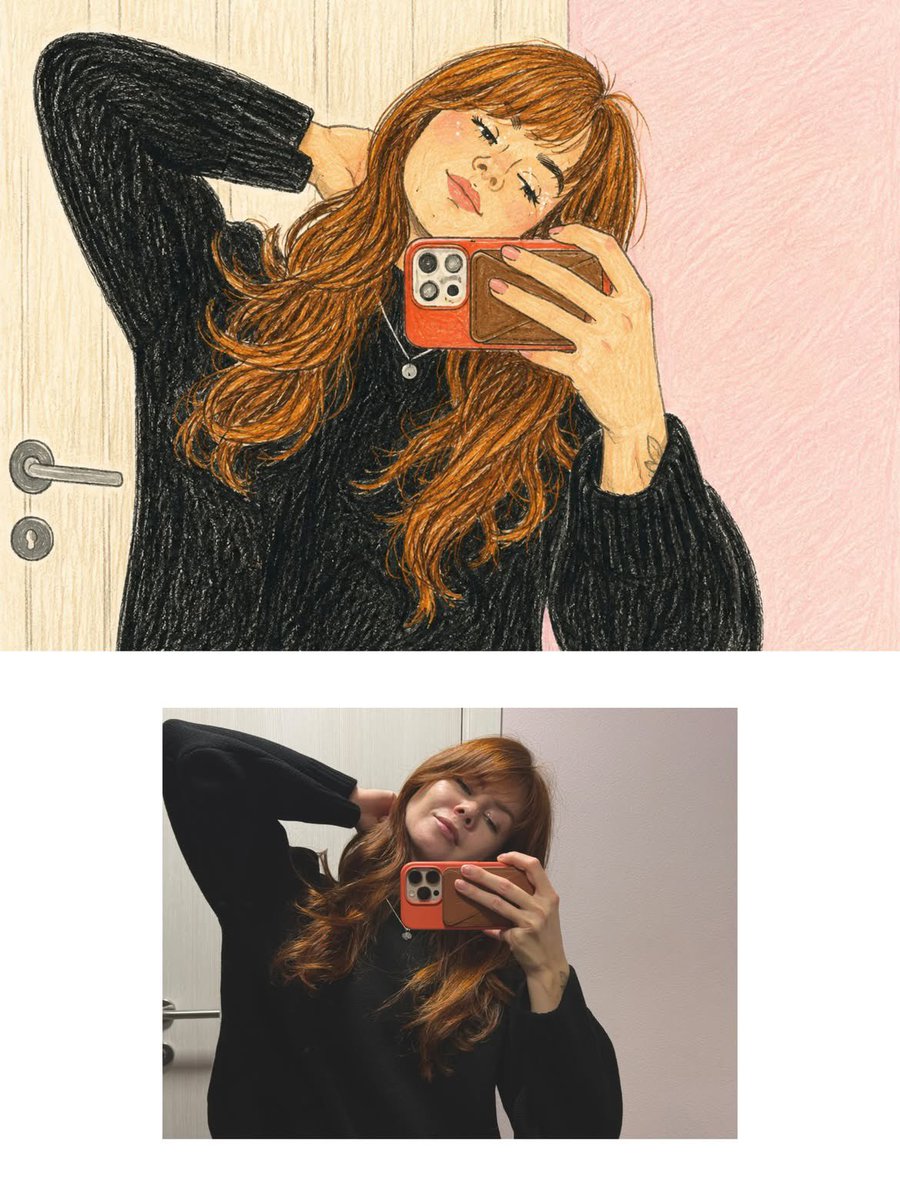
Transform the uploaded photograph into a beautiful, hand-drawn colored-pencil illustration while preserving the original photograph's exact content, composition, and emotional atmosphere. 1. REFERENCE IMAGE ACCURACY Carefully analyze the uploaded photograph, including the subject's identity, facial features, hairstyle, expression, pose, clothing, accessories, body proportions, surrounding objects, background, camera angle, perspective, lighting, and small distinctive details. Recreate the same scene as an illustrated drawing. Preserve the recognizable appearance of the original subject and the exact arrangement of the scene. Do not change the pose, invent new objects, remove important details, or alter the original environment. 2. ART STYLE Use a traditional colored-pencil and wax-crayon illustration style, resembling a beautiful drawing made by hand on textured cream-colored sketchbook paper. Include: - Visible colored-pencil strokes and delicate crosshatching. - Soft, imperfect hand-drawn outlines. - Layered pencil shading with natural variations in pressure. - Fine paper grain and subtle crayon texture. - Warm, muted colors with gentle pastel undertones. - Slightly sketchy contours and charming handmade imperfections. - Natural color blending without smooth digital gradients. - Detailed hair rendered with individual flowing pencil strokes. - Expressive facial details with simplified yet recognizable features. - Soft shadows created through layered pencil strokes rather than photographic shading. 3. COLOR PALETTE Use a warm, nostalgic palette featuring creamy beige, dusty pink, muted brown, warm caramel, charcoal black, soft gray, and subtle earthy colors. Match the original photograph's actual colors while translating them into a traditional illustration medium. 4. BACKGROUND AND ENVIRONMENT Recreate the original background faithfully, including furniture, doors, walls, streets, sidewalks, railings, plants, pets, buildings, and other visible elements. Render background details with loose but intentional pencil strokes. Maintain the original depth, perspective, and spatial relationships while giving the entire scene a cohesive, hand-illustrated appearance. 5. LIGHTING AND MOOD Preserve the original lighting direction and overall atmosphere. Create a cozy, intimate, nostalgic feeling, as if the moment were captured in a personal illustrated diary or a page from an artist's sketchbook. 6. FINAL FINISH The entire image must look genuinely hand-drawn using colored pencils on textured paper, NOT like a photograph with an artistic filter. Maintain the original aspect ratio and composition. Use fine illustrative details, organic linework, visible pencil grain, gentle imperfections, and consistent hand-drawn textures throughout the image. IMPORTANT: The uploaded photograph is the sole reference for the scene. Preserve its identity, pose, objects, and composition. Transform only the visual medium into a traditional colored-pencil illustration. NEGATIVE PROMPT: Photorealism, 3D rendering, glossy digital painting, vector art, anime, exaggerated cartoon features, plastic skin, airbrushed shading, smooth digital gradients, artificial outlines, excessive blur, distorted anatomy, altered facial identity, incorrect hands, missing objects, invented background elements, oversaturated colors, and photographic textures.

GPT Image 2.5
Task: Create a 1:1 Square 3D Textile Art Toy Bust from the Attached Real Photograph
海报与版式3:4

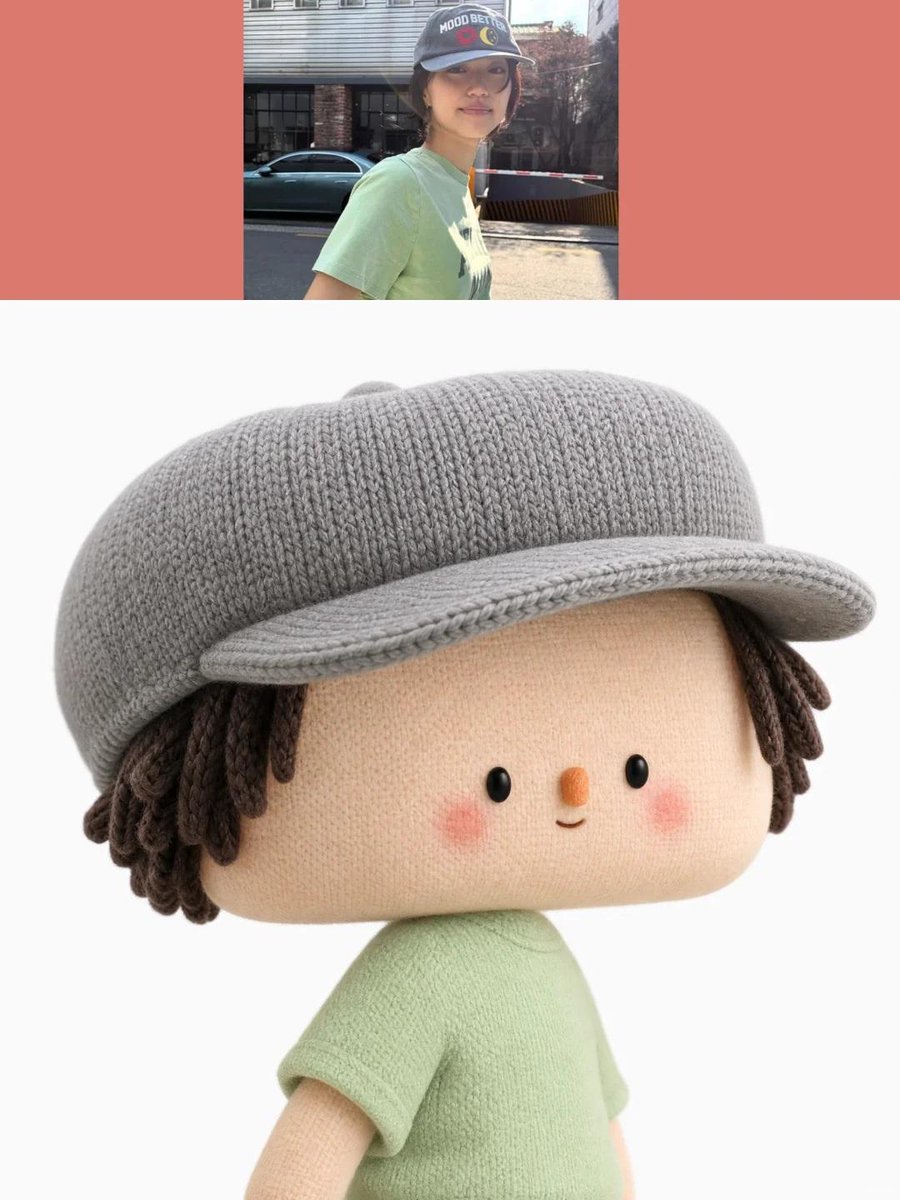
Task: Create a 1:1 Square 3D Textile Art Toy Bust from the Attached Real Photograph Use the attached real photograph to create a square 1:1, stylized 3D textile art toy bust. Interpret the inputs by their roles: the real photograph is the source of identity and content, while the minimalist white-background toy image is the style reference. Their order does not matter. Preserve the subject’s identity, facial expression, pose, and spatial relationships between objects. Reconstruct the subject as an exaggerated, humorous designer collectible toy. Do not apply a simple fuzzy or plush filter to the original photograph. ## 1. Style Reference Borrow only these visual characteristics from the reference image: - An oversized, horizontally broad head with rounded corners. - Extremely small, centrally concentrated facial features with generous facial negative space. - Sculptural knitted forms, clustered yarn shapes, and soft textile construction. - Subtle asymmetry for a handmade, designer-toy appearance. - Contrast between fine-grained flocked surfaces and chunky knitted textures. - A deliberate primary and accent color hierarchy. - Clean, minimalist white studio photography. Do not inherit the reference character’s body, pose, hairstyle, hat, glasses, clothing, props, or colors. ## 2. Subject and Identity Preservation The real photograph is the exclusive source of visible content. Reproduce only the body parts, hairstyle, clothing, accessories, objects, poses, and contact relationships that are actually visible in the original image. Never invent or complete details that extend beyond the photograph. Identify 2–5 distinctive identity anchors from the source image. Exaggerate 1–2 of them while simplifying the remaining details to maintain recognizability. - **Head:** Transform it into a broad, thick, rounded rectangular block or a short cylindrical form with softened corners. - **Eyes:** Use tiny black beads or capsule-shaped forms. - **Nose:** Reduce it to a small, rounded rectangular block. - **Mouth:** Preserve the original expression using a short line or a small opening, as appropriate. - **Hair:** Reconstruct it as large yarn loops, chunky knitted clusters, or sculptural bundles of wool. - **Hands:** Strictly preserve the number of visible hands. If no hands are visible, add none. If one hand is visible, reproduce only one. Preserve its orientation, sleeve cuff, and contact with the original object. - **Text and logos:** Convert any visible lettering or branding into illegible woven or knitted texture rather than readable text. ## 3. Composition Create a compact, close-up head-and-shoulders composition. - The head should occupy approximately 75–90% of the image width. - Compress the body into a small supporting form, retaining only the essential visible pose, gestures, and objects. - Allow elements to be cropped by the image boundaries when necessary. - Do not add body parts or anatomy extending beyond the original photograph. - Maintain a clear silhouette and recognizable relationships between the subject and any visible objects. ## 4. Visual Style **Stylized 3D textile art toy, oversized head, tiny concentrated facial features, sculptural knitted forms, micro-flocked surfaces.** Prioritize abstract exaggeration over photorealism while preserving recognizability through the subject’s silhouette, hairstyle, facial expression, pose, clothing, and visible objects. The result should feel like a thoughtfully designed, premium collectible art toy rather than a conventional 3D cartoon character. ## 5. Color Palette Automatically develop a cohesive palette of 3–5 colors, including: - A dominant primary color. - A contrasting accent color with a clear difference in temperature or brightness. - One or more supporting colors. - A neutral color for balance. Non-identity-defining elements may be recolored to improve visual harmony. Preserve the essential identity cues of the original subject while avoiding monotonous palettes, excessive neutrals, evenly distributed rainbow colors, or repetitive mechanical stripes. ## 6. Materials, Texture, and Lighting Use distinct textile treatments for different surfaces: - **Face, hands, and small components:** Fine, dense micro-flocked or short-fiber felt surfaces. - **Hair, hats, and clothing:** Chunky knitting, crochet structures, large yarn loops, and clustered wool forms, applied only where those elements exist in the original photograph. Create visible material contrast between the fine-grained felt and the coarser knitted structures. The surfaces should appear sculpted from real textile materials, not covered with a generic fuzzy filter. Use a subtly warm-white seamless background, soft high-key studio lighting, gentle highlights, and short, delicate shadows. Keep the presentation clean, bright, and premium. ## 7. Strict Exclusions - No photorealistic eyeballs, detailed nostrils, realistic lips, natural skin texture, or individual hair strands. - No copying the reference character’s identity or distinctive design elements. - No invented body parts, hand gestures, accessories, clothing, or props absent from the source photograph. - No conventional 3D cartoon aesthetics. - No plastic, polymer clay, wax figure, or long-pile plush appearance. - No readable text, logos, or branding. - No rooms, environmental scenes, or complex backgrounds. - No generic fuzzy overlay that obscures the underlying sculptural textile construction. ## Final Priority **The source photograph determines WHAT is depicted. The style reference determines HOW it is depicted.** Deliver a polished, humorous, exaggerated 1:1 square 3D textile art toy bust with a distinctive oversized head, tiny facial features, sculptural yarn construction, contrasting textile textures, a deliberate color palette, and clean white studio lighting. Preserve the original subject’s identity and visible content without inventing anything beyond the photographic evidence.

GPT Image 2.5
请将我上传的每一张照片分别制作成一张独立的高级设计海报,不多图拼接,每张照片单独输出。整体采用 3:4 竖版构图,上下两个区域高度严格 1:1,各占画面 50%。
海报与版式3:4

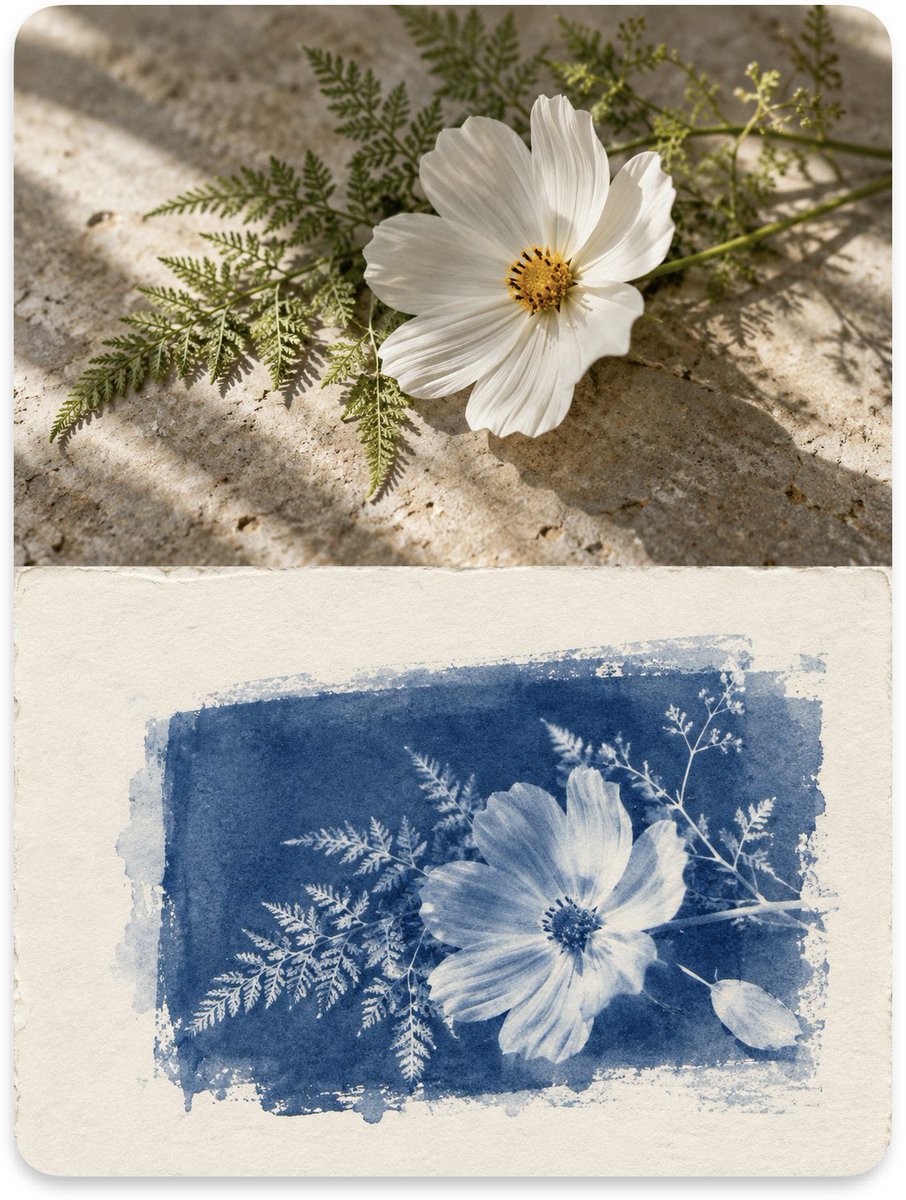
请将我上传的每一张照片分别制作成一张独立的高级设计海报,不多图拼接,每张照片单独输出。整体采用 3:4 竖版构图,上下两个区域高度严格 1:1,各占画面 50%。 上半部分保留原始照片,保持主体身份、结构、姿态、真实质感、自然光影与原有色彩氛围,仅进行轻微高级调色,使其具有艺术摄影与独立出版物质感。为适配画幅,可自然扩展环境背景,但不得拉伸、扭曲或改变主体。 下半部分只提取照片中最具识别性的**主体轮廓、结构走势与姿态关系**,不复制完整场景,而是像把主体本身轻轻压在感光纸上曝光一样,重构为一张 **cyanotype photogram / 蓝晒感光印相**。主体只以剪影、半透明叠层和边缘光晕的方式存在:实体部分变为纸白或浅蓝,被遮挡的地方留下深浅不一的普鲁士蓝,使人一眼认出原物,又感到它只是“曾经在这里停留过的一个影子”。 可根据主体自身结构,加入极少量能被“压印”的辅助物:一片叶子、一根草茎、一段线绳、一枚纸片或与原图语义相关的小物,它们与主体以剪影方式自然交叠,形成植物标本式的诗意关系。不要逐物转绘,不要画成插画,所有形体都应像光与物体接触后留下的真实痕迹。 材质必须强调蓝晒工艺的真实感:厚水彩纸纤维、刷涂药液留下的不规则蓝色边缘、水洗后的轻微流痕、曝光不均、边缘柔化的光晕、半透明叠印与偶尔的纸面压痕。不要数码蓝色滤镜,不要均匀平涂。 构图以**小主体 + 超大面积留白**为核心。蓝色曝光区域只占下半部分约30%–40%,可呈不规则刷涂边缘的矩形、残缺方块或自由形,安放于暖白纸面中,可偏心、略偏下或局部出血。留白像未被涂药的纸,安静、干净,是作品的一部分。 色彩以普鲁士蓝、深靛蓝、雾蓝、浅蓝与纸白构成单色系统,仅允许从上方照片中提取一种极淡的情绪色,以铅笔或小色块的方式出现在不到2%的面积上作为呼应。避免青绿、荧光蓝、科技蓝与滤镜感。 文字只作极少量档案性介入,像用铅笔写在蓝晒纸边缘的编号、日期、地点或一句短注,细小、松弛、带书写偏差,不限制语种。 整体呈现**蓝晒感光、植物标本、光的拓印、纸白留白与档案注记**共同构成的安静视觉。核心原则是:不是把照片调成蓝色,而是让主体像光一样在纸上留下一次温柔的痕迹。避免数码滤镜、完整写实、背景填满、平涂矢量、3D感、廉价复古感和模板化海报。

GPT Image 2.5
Use the uploaded photograph as the sole source for the subject, identity, pose, express...
海报与版式1:2

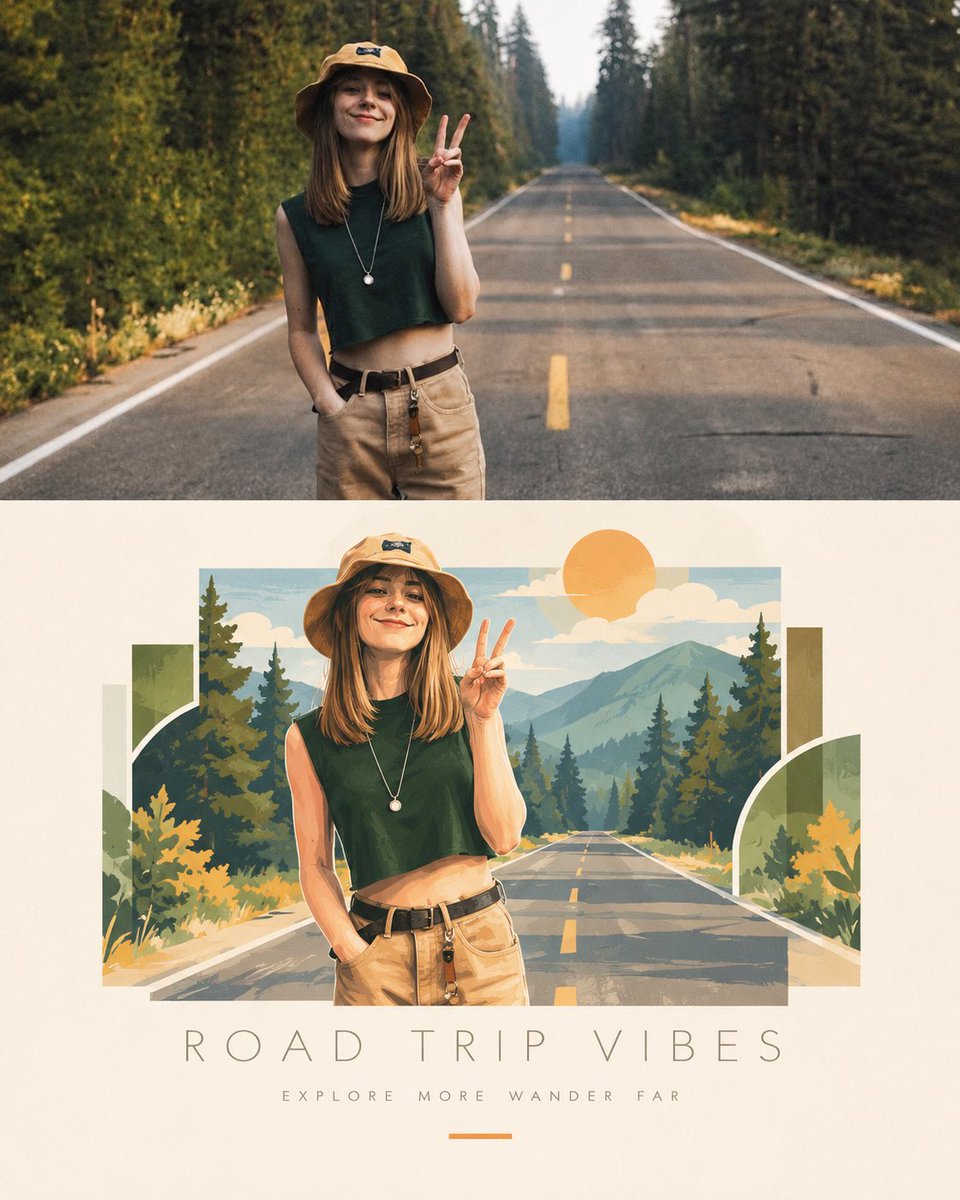
Use the uploaded photograph as the sole source for the subject, identity, pose, expression, clothing, accessories, important objects, camera angle, framing, location, season, weather, lighting, and narrative theme. Transform the entire photograph into one standalone contemporary picture-book lifestyle illustration on warm textured paper. Output only the completed illustration—not the source photograph, not a before-and-after comparison, not a top-and-bottom layout, not a split screen, and not a collage. Preserve the source image’s camera viewpoint and composition. If the photograph uses a high angle, low angle, close-up, overhead view, or unusual perspective, retain that perspective and its foreshortening. Preserve the original visible body range and crop. Do not zoom out, expand the scene, or invent body parts outside the photograph. Preserve the main subject’s recognizable identity anchors: hairstyle silhouette, hair length and color, approximate face shape, apparent age, expression category, gaze direction, clothing categories, dominant garment colors, visible patterns, footwear, bag, glasses, jewelry, hat, hood, and other distinctive accessories. Preserve the original pose, hand gesture, arm position, leg position, body orientation, and interaction with the environment. Redesign the person as a charming contemporary picture-book character with moderate stylization. Use a softly simplified face, expressive but not excessively enlarged eyes, delicate eyebrows, a small simplified nose, a clearly readable mouth, warm rosy cheeks, and graceful facial contours. Preserve enough hairstyle, face-shape, expression, and accessory information for the character to remain recognizably connected to the source person. Do not trace the photograph mechanically. Simplify and reorganize facial details into a coherent illustrated language while preserving the original emotional tone. A smile, wink, pout, serious expression, surprise, or other distinctive expression must remain recognizable. Render the hair with flowing groups of fine ink, colored-pencil, and dry-pastel strokes. Preserve its approximate length, curl pattern, parting, volume, direction, and movement. Avoid both photorealistic individual strands and a flat plastic hair shape. Render clothing and accessories with broad matte color regions, loose sketch lines, dry-brush edges, and visible colored-pencil or oil-pastel texture. Preserve the major garment layers, silhouettes, color relationships, recognizable patterns, bag placement, footwear, and important accessories. Simplify minor seams and hardware without replacing the outfit. Medium and surface: combine matte gouache, oil pastel, wax crayon, colored pencil, dry ink, and distressed screen-print texture. Use slightly broken contours, uneven pigment coverage, visible paper grain, scattered speckles, rubbed edges, subtle print misregistration, dry-brush gaps, and handmade irregularity. The result should look drawn and printed on fibrous paper rather than digitally airbrushed. Derive the palette from the uploaded photograph. Preserve its dominant colors and emotional temperature, then translate them into a slightly muted, warm, print-friendly palette. Do not impose autumn orange, yellow leaves, dark pavement, or any other seasonal palette unless those elements are supported by the source image. Infer the environmental theme exclusively from the source: - spring scenes may use fresh greens, blossoms, pale sunlight, and airy decorative marks; - summer scenes may use clear blues, bright vegetation, warm light, water, or lively saturated accents; - autumn scenes may use ochre, rust, dry leaves, and warm dark ground; - winter scenes may use cool gray-blue, snow, bare branches, knit textures, and soft indoor light; - indoor scenes should preserve their actual domestic, café, office, bedroom, or studio atmosphere; - urban, seaside, forest, travel, celebration, and everyday-life scenes should retain their own recognizable contextual motifs. These examples are conditional, not mandatory. Never change the source season, location, weather, or activity merely to fit a predetermined theme. Simplify the environment into large readable graphic shapes while retaining the scene-defining elements needed to understand the location and action. Translate existing plants, flowers, snow, water, clouds, architecture, furniture, street markings, seasonal objects, or ground textures into the same handmade illustration language. Remove irrelevant photographic clutter. Use decorative motifs only when they are already present or logically supported by the source environment. For example, use leaves for a leafy street, flowers for a garden, waves for a seaside scene, snowflakes for a snowy setting, stars for a nighttime scene, or small household motifs for an indoor memory. Do not add autumn leaves to unrelated scenes. Keep the main subject as the clear focal point, occupying approximately the same visual importance as in the source. Create contrast using the source-derived background colors rather than automatically using a black background. Background shapes may be dark or light depending on what best preserves the original atmosphere and separates the subject. Optional companion-animal module: Preserve an animal if one is already present in the source. Add a new small companion animal only when the user explicitly requests one. Render it in the same gouache, pastel, and printed-paper style. Do not insert a default cat. Optional typography module: Add lettering only when the user supplies exact text. Main title: [MAIN TITLE] Small note 1: [SMALL NOTE 1] Small note 2: [SMALL NOTE 2] Render the main title as loose hand-painted lettering with naturally uneven strokes. Render secondary notes as smaller handwritten text. Choose lettering colors from the image palette so they remain readable but secondary to the subject. Add no more than two small hearts, underlines, stars, leaves, flowers, or similar marks, and only when they match the source theme. Use only the exact supplied wording. Do not infer the season from the title, translate the text, rewrite it, or invent captions. If no wording is supplied, omit all typography. Finish the artwork with a subtly distressed printed-paper treatment: worn pigment, scattered grain, small flecks, dry-brushed transitions, and naturally broken marks near portions of the perimeter. This should feel like handmade printing on paper, not a picture frame, Polaroid, torn-paper collage, or decorative border. Overall aesthetic: a warm contemporary picture-book lifestyle illustration, editorial memory poster, matte gouache, colored pencil, oil pastel, distressed screen printing, tactile paper grain, expressive character drawing, source-derived colors, handmade warmth, and moderate visual sweetness. Avoid: retaining photographic regions, comparison layouts, fixed autumn styling, automatic orange leaves, changing the source season, changing the location, changing the weather, pasted photo faces, photorealistic skin, smooth digital gradients, glossy 3D rendering, clean vector art, extreme chibi proportions, giant sparkling eyes, generic replacement faces, changed hairstyle, changed outfit, changed pose, invented limbs, expanded framing, random animals, unrelated decorations, excessive environmental motifs, invented text, fake signatures, logos, social-media marks, or watermarks. Replace the entire uploaded photograph with the illustrated artwork. Return exactly one full-frame illustration. Do not display, reproduce, embed, or retain the source photograph anywhere in the final output.

GPT Image 2.5
Lumina Mascot LogoLumina · AI 提示词与光影画廊·纯粹呈现 · 非营利性灵感交流与提示词研究
免责声明